
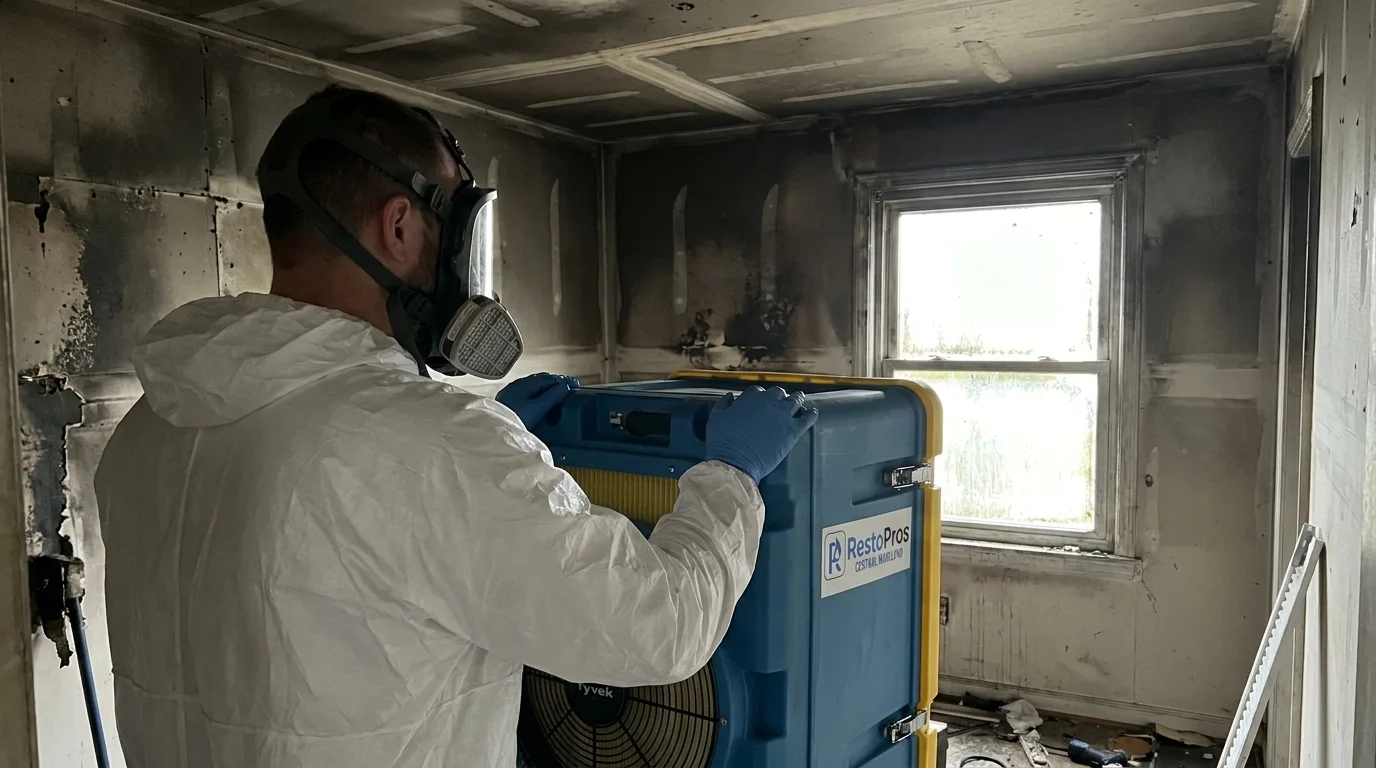
24/7 Emergency Fire Damage Restoration in Rockville
24/7 emergency fire damage restoration in Rockville and surrounding areas. IICRC-certified, insurance billing accepted. Call (240) 261-1639.
Fire damage emergency in Rockville? We answer 24/7 and begin containing smoke migration and acidic soot residue before it etches into your home’s finishes. Within hours of a fire being extinguished, soot keeps working: protein residue from a kitchen fire can yellow painted trim and cloud glass overnight, while synthetic soot from burned plastics and upholstery spreads a fine, oily film through ductwork into rooms the fire never touched. The longer those byproducts sit, the more they cost to remove and the more likely the odor becomes permanent.
What Fire Damage Restoration actually involves
Fire damage restoration is not reconstruction. It’s the mitigation work that happens between the fire department leaving and a contractor framing new walls: identifying what can be cleaned, what has to come out, and stopping soot and odor from spreading further through the structure. The first distinction we make is smoke type. Fast, high-heat fires fueled by wood or paper leave dry, powdery soot that vacuums and wipes off relatively easily. Smoldering fires involving plastics, foam, or electrical components leave wet smoke: a sticky, smeary residue with a stronger odor that bonds to surfaces and resists dry cleaning methods. We test residue pH early because fire byproducts run acidic and will continue pitting chrome, tarnishing brass, and corroding appliance housings for days after the flames are out if left untreated.
Structural materials get evaluated individually. Drywall and insulation that absorbed heavy smoke often need to come out rather than be cleaned, since porous materials trap odor at a cellular level no amount of surface treatment reaches. Framing, subfloor, and masonry are usually cleanable. Contents get split into salvageable and non-salvageable categories, with salvageable items going through ultrasonic cleaning, chemical sponging, or ozone chambers depending on the material. A single-room kitchen fire might wrap up mitigation in a matter of days; a multi-room structural fire with contents pack-out typically runs several weeks before the space is ready for rebuild trades.
Our process
- Soot and residue characterization. We test pH and classify the smoke type (dry, wet, or protein) before choosing a cleaning chemistry, since the wrong approach can set a stain or spread odor instead of removing it.
- Structural triage and controlled demolition. Charred, saturated, or heavily smoke-logged materials that can’t be restored come out first. Any water used to fight the fire gets addressed following IICRC structural drying standards so it doesn’t turn into a second loss.
- Cleaning of structure and contents. HEPA vacuuming, chemical sponges, and wipe-downs handle fixed surfaces; salvageable contents are inventoried, packed out, and cleaned off-site.
- Odor neutralization. Thermal fogging follows the same penetration pattern smoke took through the structure, and sealing or ozone/hydroxyl treatment addresses what’s trapped in porous materials that remain.
- Final clearance and documentation. We photograph conditions, log moisture and odor readings, and prepare the paperwork adjusters and rebuild contractors both need before the next phase starts.
What separates a good fire damage response from a bad one
The most common shortcut is treating all soot the same way. Using a dry-cleaning approach on wet smoke residue smears it deeper into the surface instead of lifting it, and skipping pH neutralization lets corrosion keep spreading on metal fixtures and electronics for days after cleanup appears finished. Soot also migrates further than it looks: HVAC returns, behind outlet covers, and inside cabinet joints often hold residue long after visible surfaces look clean, and missing those spots is why odor comes back a few weeks later. Adjusters pay close attention to documented pre-loss condition, moisture readings tied to any firefighting water, and an itemized contents inventory with photos, since those records are what determine what’s covered as cleaning versus what’s written off as a total loss.
What does Fire Damage Restoration cost?
Costs vary widely based on how much of the structure was affected, whether contents need pack-out, and whether demolition is required before cleaning can start. Every loss gets a written scope before work begins so you know what’s included and why, since no two fires leave the same combination of soot type, water exposure, and structural damage. Homeowners insurance typically covers fire damage restoration under the dwelling and contents portions of a standard policy, though coverage for odor remediation and code-related items can vary by carrier.
| Scenario | Typical range |
|---|---|
| Smoke odor only, single room | $400 - $1,200 |
| Kitchen fire, localized char and soot | $3,000 - $8,000 |
| Contents pack-out and cleaning (per room) | $800 - $2,500 |
| Whole-floor smoke and soot damage | $10,000 - $25,000 |
| Major structural fire, multiple rooms affected | $25,000 - $75,000+ |
Seasonal & regional considerations
Rockville’s winter heating season brings the steady run of space-heater and fireplace fires common across older Central Maryland neighborhoods, and homes built before the 1960s often have plaster and lath that absorb soot more deeply than modern drywall, which can mean more material removal rather than surface cleaning. Maryland’s humid summers work against delayed mitigation too: moisture in the air helps smoke odor bond further into porous materials the longer a property sits untreated, which is part of why an early response matters more than it might seem from the outside.
Service area
We respond to fire damage calls throughout Rockville and surrounding Montgomery County communities, including Gaithersburg, Bethesda, Germantown, and Silver Spring.
If smoke or fire has touched your home, don’t wait on the soot. Call (240) 261-1639 to begin smoke and soot removal before residue sets into finishes and odor works its way deeper into the structure.
Frequently Asked Questions
Does homeowners insurance cover fire damage restoration?
What's the difference between protein soot and synthetic soot, and why does cleanup vary?
How soon does cleanup need to start after a fire is put out?
Can salvageable contents actually be restored, or do they need to be replaced?
Does firefighting water cause a separate water damage problem?
Looking for the best fire damage restoration company in Rockville?
RestoPros of Central Maryland provides fire damage restoration in Rockville, MD and the surrounding area. Customers rate us 4.9 out of 5 stars across 28 Google reviews. We answer calls 24/7 — call (240) 261-1639 for immediate help.
Need Fire Damage Restoration now?
We respond 24/7 across Rockville and surrounding MD cities.