
Fire damage restoration follows a sequence: emergency mitigation to stop ongoing damage, a full assessment of what’s salvageable, water removal if sprinklers or hoses were used, soot and smoke residue cleanup, deep cleaning of surfaces and belongings, odor treatment, and finally any reconstruction the fire or the firefighting effort made necessary. The order matters. Skipping ahead to cleaning before the structure is dry, or painting over soot before it’s removed, tends to lock problems in rather than solve them. Most of this work needs a trained crew, but the first few hours after the fire department clears the scene are mostly about what the homeowner does and doesn’t do before that crew arrives.
What the House Looks Like Right After a Fire
Even a small, contained fire, like one that starts in a kitchen and gets put out with an extinguisher, leaves more damage than the burned area suggests. Soot travels. It rides on heat and smoke through HVAC ducts, settles on walls two rooms away, and works into fabric, grout lines, and the inside of cabinets. Plastic items near the fire may have melted or off-gassed a film onto nearby surfaces. If the fire department used water or foam, you’re also dealing with soaked flooring, insulation, and drywall on top of the fire damage itself. The smell is usually the first thing people notice when they walk back in, and it’s also the hardest part to fully resolve without the right equipment, because smoke odor isn’t sitting on the surface. It’s embedded in porous materials: drywall, insulation, carpet padding, upholstery.
Immediate Steps Before Help Arrives
Once the fire department has cleared the property as safe to re-enter, here’s what actually helps:
- Ventilate if it’s safe to do so. Open windows and exterior doors to start clearing smoke odor and reduce humidity, but only in areas the fire marshal or fire department has confirmed are structurally sound.
- Photograph everything before you touch anything. Insurance claims move faster and more accurately when there’s a visual record of the damage as it was found, room by room.
- Shut off utilities if instructed. Fire departments will often cut power or gas as a precaution; don’t attempt to restore either yourself.
- Remove wet items that can be salvaged quickly, like area rugs or furniture sitting in standing water, to limit secondary damage. Leave heavily charred or structurally questionable items in place for the adjuster and restoration team to document.
- Cover open areas. If windows, a roof, or a wall section were damaged, board-up or tarping protects the property from weather and keeps it secure until repairs begin.
What Not to Do
A few instincts that feel helpful actually cause more damage:
- Don’t turn on the HVAC system. If soot got into the ductwork, running the system spreads it through the entire house.
- Don’t wipe soot off walls or fabric with a damp cloth. Dry soot smeared with water often sets into the material permanently, turning a cleanable surface into one that has to be replaced.
- Don’t use household cleaners on smoke-damaged surfaces before a professional has assessed them. The wrong cleaner can react with soot residue or push it deeper into porous materials.
- Don’t throw away damaged items before documenting them. Insurers typically want to see or at least review photos of what’s being claimed before it’s disposed of.
- Don’t assume a room that looks fine is fine. Smoke odor and fine soot particles travel well beyond the visible burn area, and mild-looking rooms can still carry a measurable soot film.
When to Call a Professional
A fire contained to a single pan on the stove with no structural scorching might be manageable with a thorough DIY cleaning and some odor-neutralizing effort. Almost everything beyond that benefits from a professional assessment, especially if:
- Smoke traveled through multiple rooms or into the HVAC system
- There’s structural charring to framing, subfloor, or roof decking
- Water was used to extinguish the fire, which means drying needs to start fast to prevent mold on top of the fire damage
- The smell persists after the area has been ventilated and surface-cleaned
- You’re filing an insurance claim and need documented, itemized damage assessment
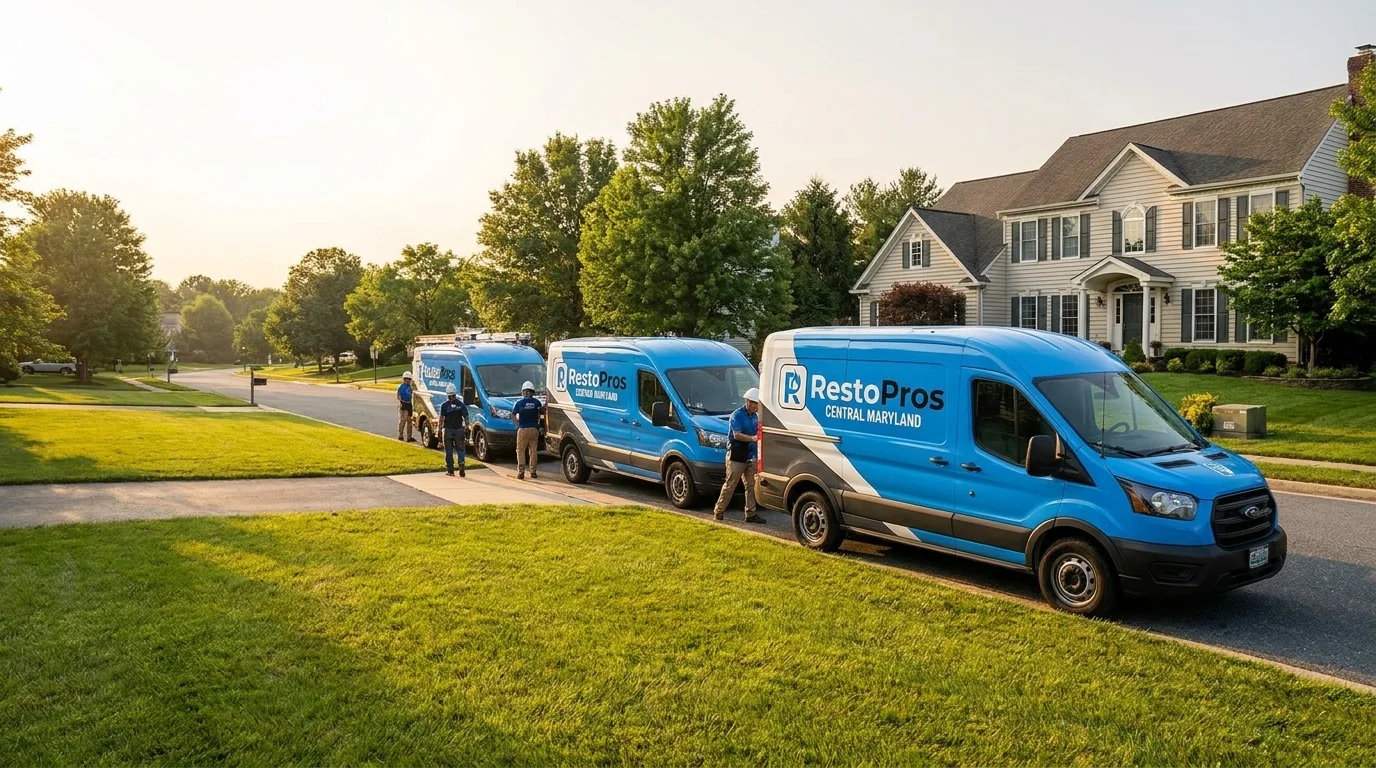
RestoPros of Central Maryland handles fire damage restoration and smoke damage restoration for homes throughout Rockville, Silver Spring, Bethesda and the surrounding Central Maryland communities, and can walk through the property to separate what’s salvageable from what isn’t before anything gets thrown out or painted over. Call (240) 261-1639 if you want that assessment done before you start cleanup on your own.
The Longer Recovery Process
Once the immediate mitigation is done, structural drying (if water was involved) typically comes first, using the same moisture-monitoring approach used in water damage jobs: checking subfloor, drywall, and framing moisture levels until they’re back to a normal range, not just until the surface feels dry. Soot and residue removal follows, which includes HEPA vacuuming, dry sponge cleaning for certain soot types, and specialized cleaning agents matched to the surface and the kind of smoke (a grease fire leaves a different residue than a fire fueled by synthetic materials). Odor treatment is its own phase, often involving thermal fogging or ozone/hydroxyl treatment to neutralize smoke molecules that have worked into porous materials rather than just masking them. Reconstruction, if any walls, flooring, or framing need to be replaced, happens last, once everything underneath has been confirmed clean and dry. Depending on the extent of the fire, this whole sequence can take anywhere from several days for a contained, single-room fire to many weeks for a fire that reached the structure or multiple rooms.
If you’re in the middle of this right now, the most useful thing you can do is stop guessing at what’s salvageable and get a professional set of eyes on the property before more cleanup happens. RestoPros of Central Maryland can assess the damage, document it for your insurance claim, and lay out what the restoration timeline actually looks like for your specific situation. Call (240) 261-1639 to get started.