
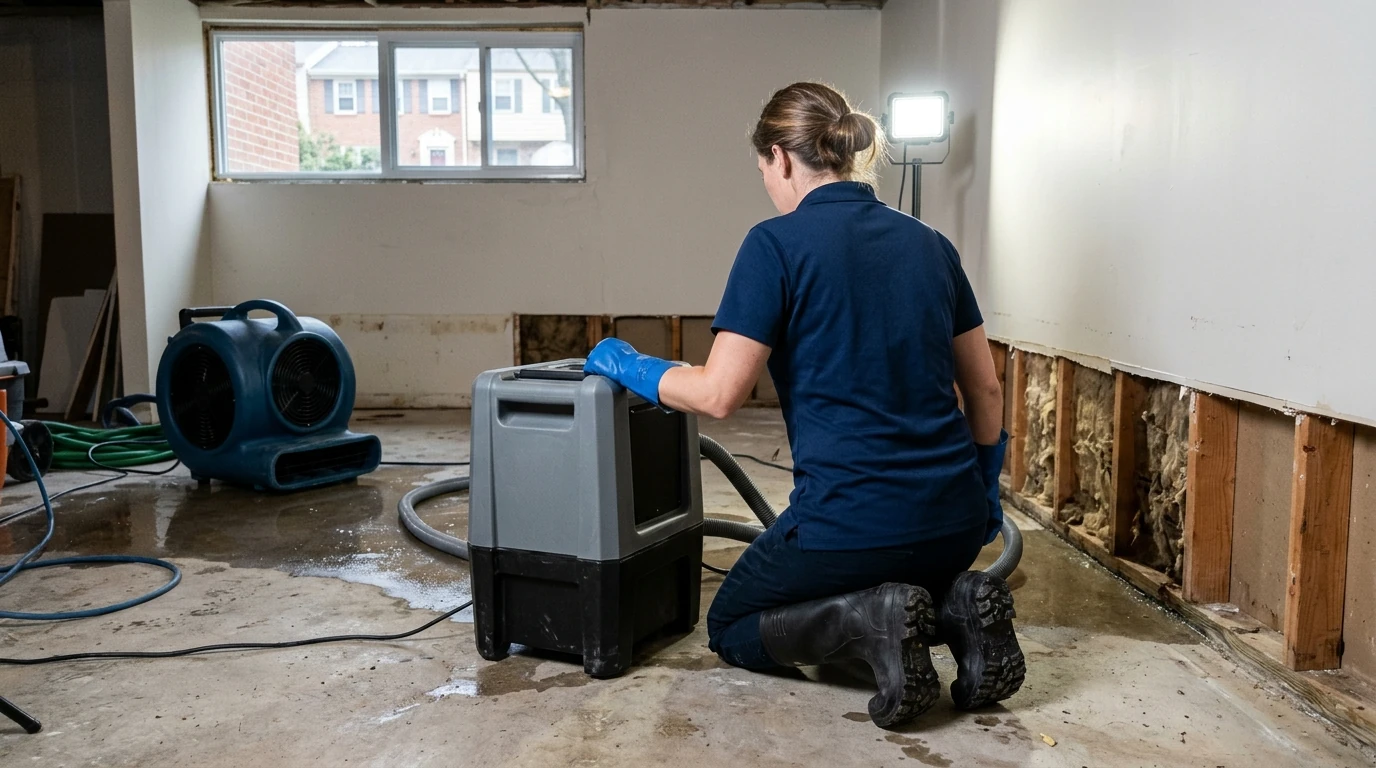
TL;DR: Sewage backup cleanup in the Rockville area typically costs $750 to $15,000 or more, depending on how much floor space got wet and whether the water reached carpet, drywall, or subflooring. A single bathroom with hard flooring is usually the cheapest scenario to clean. A finished basement that took in a sewer backup costs the most, because most of the soaked porous material has to come out. These are typical industry ranges, not a quote, since every backup and every policy is different.
If sewage is coming up through a floor drain, a downstairs toilet, or a laundry line right now, you’re probably trying to answer two things at once: how bad is this, and what’s it going to cost. Rockville’s mix of older rowhomes near Twinbrook and newer townhomes around King Farm both run into the same problem, aging or undersized sewer laterals that back up during heavy rain or a clog further down the line. The cost to clean it up depends less on the neighborhood and more on how far the water spread and how long it sat before someone called a professional.
How much does sewage backup cleanup cost in Rockville, MD?
Most sewage backup cleanups in the Rockville area fall between $750 and $15,000, with the biggest cost swing tied to square footage and how many porous materials were affected. A contained bathroom backup on tile is on the low end; a finished basement level with carpet, drywall, and insulation soaked through sits on the high end.
| Scenario | Typical cost range (estimate) |
|---|---|
| Single bathroom, hard flooring, contained backup | $750 - $2,500 |
| Unfinished basement, concrete floor, minimal porous material | $1,500 - $4,000 |
| Finished basement, carpet and drywall affected | $3,000 - $7,000 |
| Crawlspace sewage intrusion | $2,000 - $5,000 |
| Whole-level backup reaching HVAC or wall cavities | $7,000 - $15,000+ |
These are typical industry figures for sewage cleanup, not a fixed price list. The only way to know an actual number for your property is a written scope after an on-site assessment, since the extent of contamination behind walls and under flooring isn’t always visible at first glance.
What drives the price up or down?
The biggest cost driver is how long the sewage sat before cleanup started, because standing contaminated water keeps soaking deeper into porous material the longer it’s left. A backup caught within hours costs less to remediate than one discovered after a weekend away.
A few other factors move the number:
- Depth and spread. A half-inch of water across one room costs far less to address than two inches across a finished basement.
- Porous materials affected. Carpet, carpet pad, drywall below the flood line, and insulation usually cannot be cleaned and dried in place when Category 3 water is involved, so removal and disposal add labor and material costs.
- Time to response. Sewage contamination spreads bacteria into subflooring and wall cavities faster than clean water does, so a same-day response tends to limit how much has to be removed.
- Odor and sanitization needs. Antimicrobial treatment, HEPA air scrubbing, and sometimes ozone or hydroxyl deodorization add to the scope on anything beyond a quick, contained spill.
- Access. A finished basement with built-in cabinetry or a crawlspace with limited clearance takes longer to work in than an open, unfinished space.
Does a finished basement cost more to clean than an unfinished one?
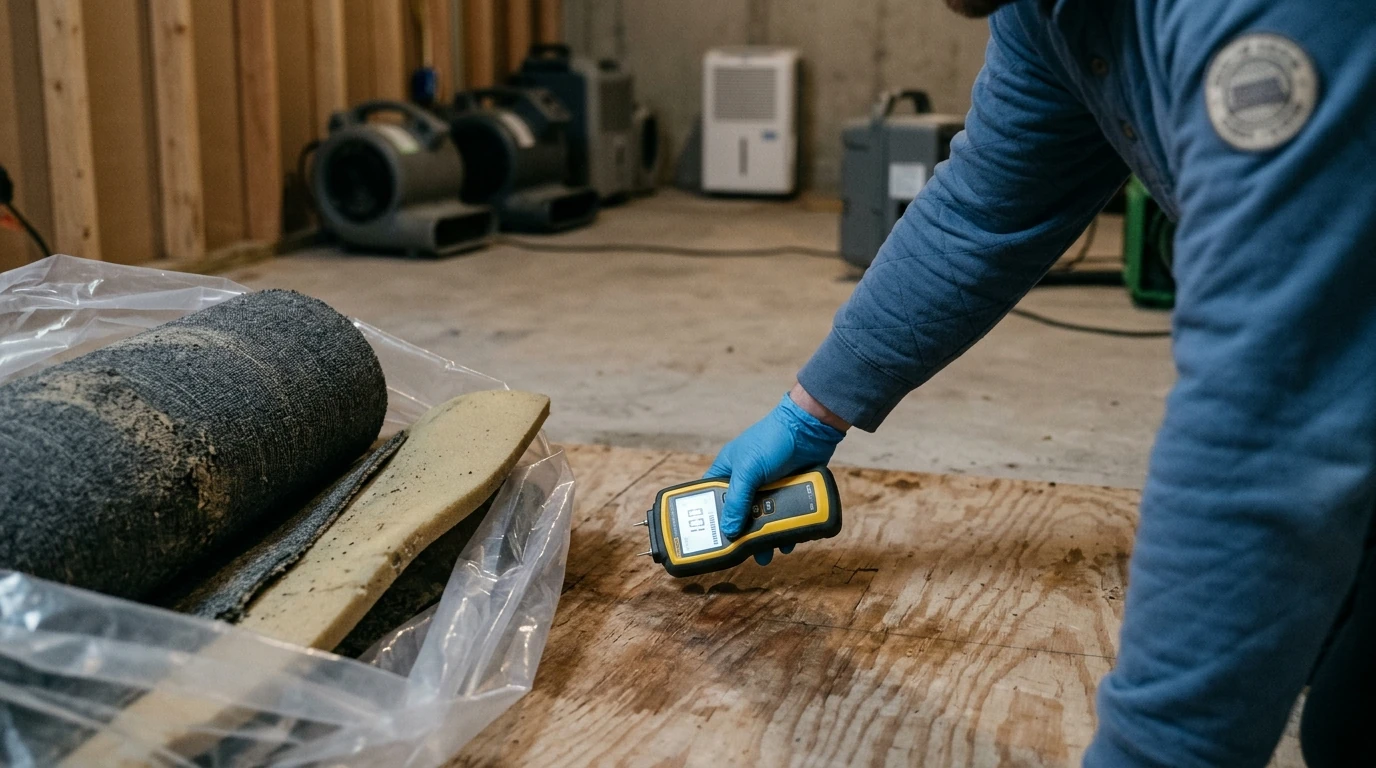
Yes, a finished basement almost always costs more because it has more porous material for sewage to soak into. Carpet, carpet pad, baseboards, and the bottom foot or two of drywall usually need to come out when contaminated water has touched them, since drying contaminated porous material in place isn’t a safe option.
An unfinished basement with a bare concrete floor and no drywall is far cheaper to clean because the surfaces involved, mostly concrete and framing lumber, can often be cleaned, disinfected, and dried without demolition. If your unfinished space has stored boxes, furniture, or finished flooring added later, treat it closer to the finished-space estimate.
One note on scope: cleanup and sanitization are one project, and rebuilding removed drywall, flooring, or trim is a separate one. A sewage cleanup quote covers extraction, demolition of contaminated material, disposal, and drying; putting the space back together afterward is typically priced and scheduled separately once the cleanup scope is finalized.
Does homeowners insurance cover sewer backup cleanup in Maryland?
A standard Maryland homeowners policy usually does NOT cover sewer or drain backup unless you’ve added a water backup endorsement. Maryland insurers are required to offer this coverage, but it’s an add-on, not something built into a base policy, so whether you’re covered depends on what you actually purchased.
If you have the endorsement, it typically covers cleanup, drying, and often the cost to repair or replace damaged materials, subject to your policy’s limits and deductible. If you don’t have it, the backup is usually treated as an uncovered loss, the same way flood damage from outside the home is excluded without a separate flood policy. Check your declarations page for a “water backup” or “sewer and drain backup” endorsement, or call your agent directly, before assuming either way. For general background on what standard homeowners policies do and don’t cover, the Maryland Insurance Administration publishes consumer guidance worth reviewing before you file.
Whatever your coverage situation, document the damage with photos and video before anything is removed, and keep receipts for every step of cleanup. That documentation matters whether you’re filing a claim or paying out of pocket, since it’s the only record of what the loss actually involved.
What happens during professional sewage cleanup?
Professional sewage cleanup follows a set sequence: contain the area, extract standing water, remove contaminated porous material, disinfect, and dry the structure to a verified moisture level. Any backup from beyond the trap, meaning anything that came up through a drain or toilet rather than from a clean supply line, is classified as Category 3 water under the IICRC S500 standard, the industry standard for water damage restoration. That classification is what determines the PPE crews wear and which materials get removed instead of dried in place.
- Containment and safety setup. The area is isolated to keep contamination from spreading to unaffected rooms, and technicians suit up in PPE appropriate for Category 3 water.
- Extraction. Standing water and sewage are pumped and extracted first, before anything else happens.
- Removal of contaminated material. Soaked carpet, pad, baseboards, and affected drywall are cut out and bagged for disposal.
- Cleaning and disinfection. Remaining surfaces are cleaned and treated with an antimicrobial to address bacterial contamination.
- Structural drying. Air movers and dehumidifiers run until moisture readings in the subfloor and framing confirm the space is dry, usually checked daily.
- Deodorization, if needed. Lingering odor from sewage contamination sometimes needs additional treatment after drying is complete.
For more on what a sewage loss actually involves from start to finish, our sewage cleanup and remediation guide walks through the full process in more detail.
Who should you call for sewage backup cleanup in Rockville?
For a sewer or drain backup, call a water damage restoration company before you call a plumber, unless water is actively flowing and needs to be shut off first. RestoPros of Central Maryland handles the extraction, contaminated material removal, disinfection, and drying for sewage backups across Rockville and the surrounding Montgomery County area, and documents the loss in a way that supports an insurance claim if you have backup coverage. A plumber still needs to clear or repair whatever caused the backup, but that’s a separate call from the cleanup itself.
If you want a sense of how a real sewage cleanup played out for another homeowner in the area, see this case study from a backup cleanup in Bethesda.
A sewage backup isn’t a project to estimate from a photo. If you’re dealing with one right now, request a written scope before you commit to a number, so you know exactly what’s included and what isn’t.
About RestoPros of Central Maryland
RestoPros of Central Maryland employs IICRC-certified technicians serving Rockville and the surrounding Montgomery, Prince George’s, Howard, and Anne Arundel County communities, with crews answering calls 24/7. The company handles water damage restoration, sewage cleanup and sanitization, mold remediation, fire and smoke damage restoration, storm damage restoration, contents restoration and storage, and odor removal across the Central Maryland region, managing each loss from the first call through the final walkthrough.
Need help now? Call RestoPros of Central Maryland at (240) 261-1639.