TL;DR: Professional sewage cleanup removes contaminated water, known as Category 3 or black water, then disinfects every surface it touched and dries the structure to stop mold and pathogen growth. In Rockville, most backups trace to a blocked municipal sewer lateral, a failed sump pump, or aging clay pipe under older homes. Shut off water use right away, keep people and pets out of the area, and call a certified restoration crew before you touch anything.
If sewage just backed up through a basement floor drain, a toilet, or a laundry line in your Rockville home, you’re not dealing with ordinary water damage. Raw sewage carries bacteria, viruses, and parasites that regular cleaning products aren’t built to handle. What you do in the next few hours affects how much of your home needs to be removed versus simply dried and disinfected.
What Does Professional Sewage Cleanup Actually Involve?
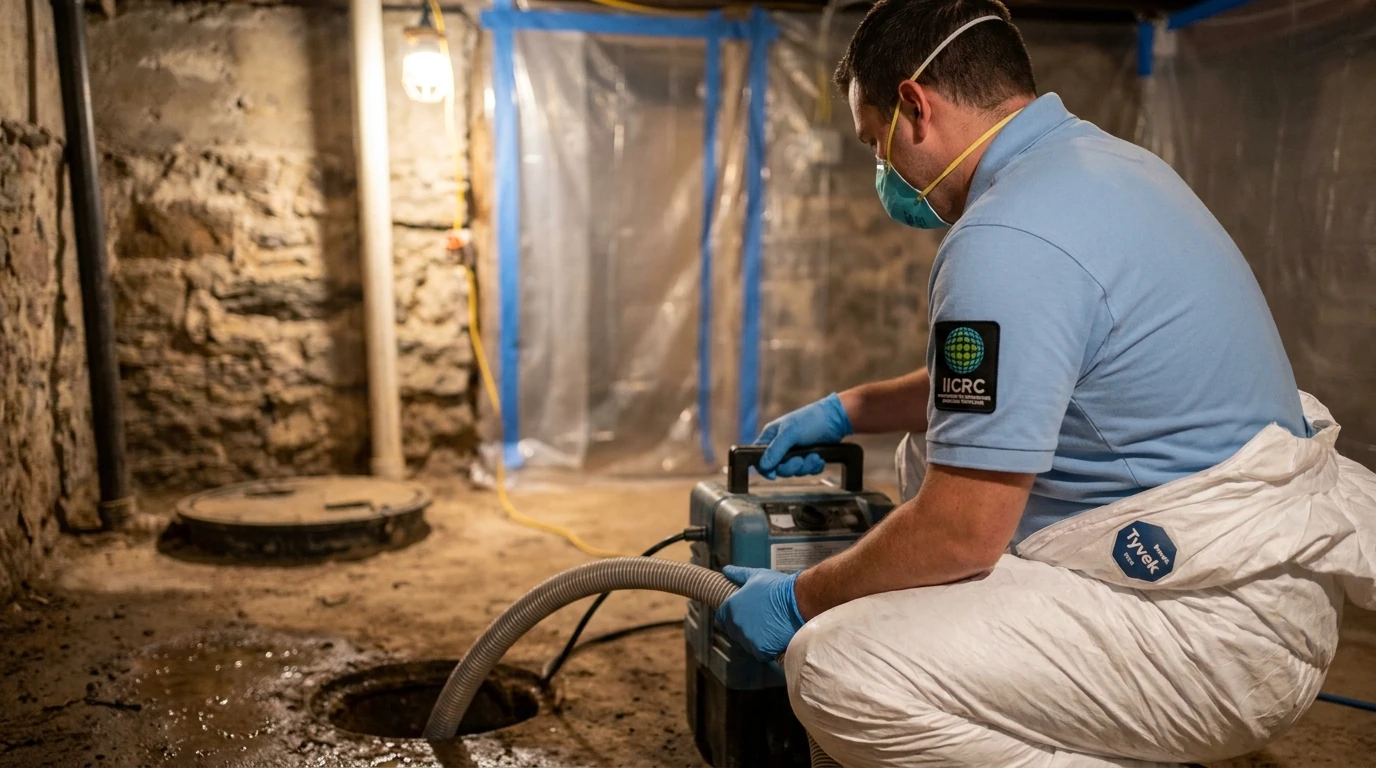
Professional sewage cleanup means extracting contaminated water, removing anything porous that absorbed it, disinfecting the structure, and verifying the air and surfaces are safe before rebuilding. It’s a sequence, not a single visit.
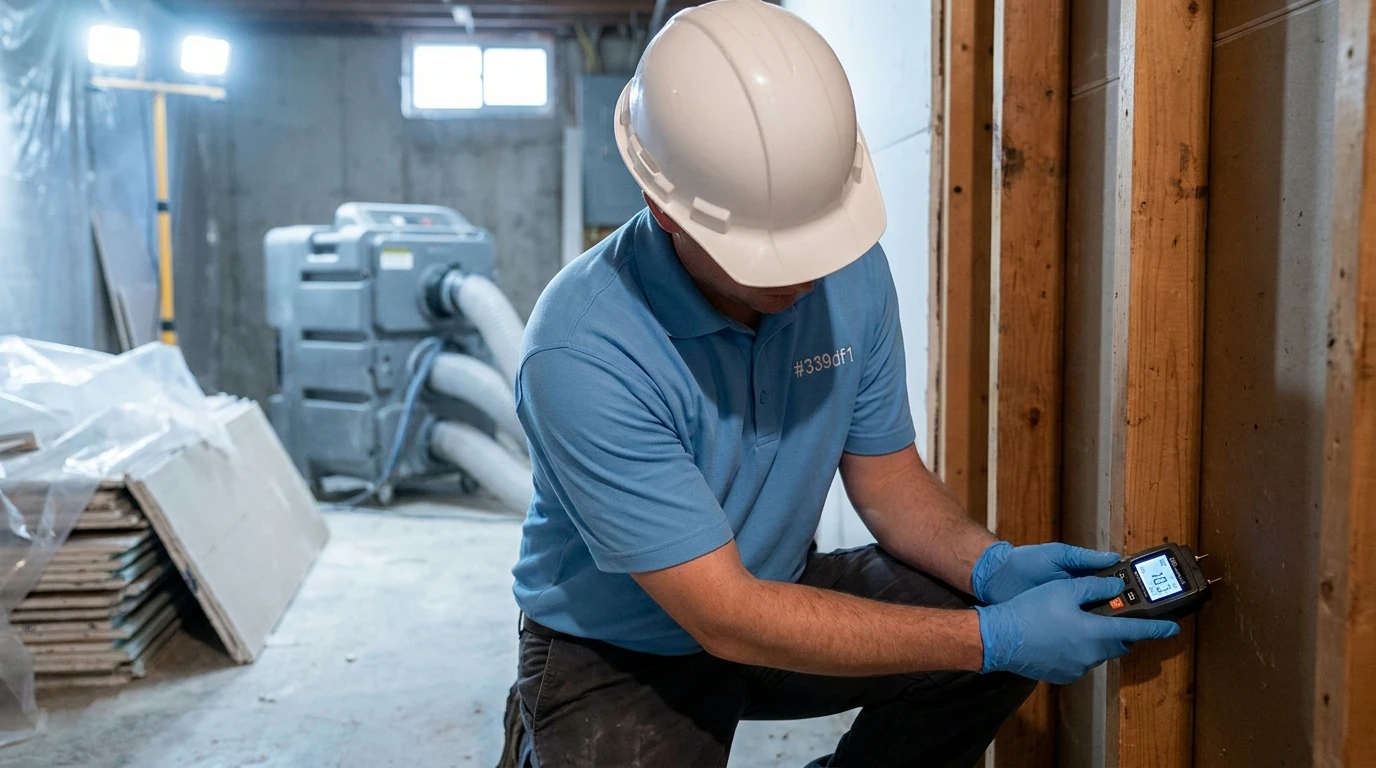
The process typically starts with extraction using truck-mounted or portable pumps, followed by removal of affected carpet, carpet pad, drywall below the waterline, and insulation, since these materials can’t be fully disinfected. Technicians then apply EPA-registered antimicrobial treatments to studs, subfloor, and remaining structure, and set up negative air pressure with HEPA air scrubbers to control airborne contaminants during the work. Drying follows the IICRC S500 standard, with daily moisture monitoring until readings confirm the structure is dry, not just until it looks dry.
In older Rockville neighborhoods like Twinbrook and the West End, where many homes still run on clay or cast-iron sewer laterals installed before the 1970s, root intrusion and pipe collapse are the leading causes of the backups we see. Newer construction near King Farm and Fallsgrove tends to have fewer lateral failures but is not immune to sump pump failure during heavy rain.
How Dangerous Is Raw Sewage in a Home?
Raw sewage is classified as Category 3 water, also called black water, the most contaminated tier in the IICRC’s water damage classification system. It can carry E. coli, salmonella, hepatitis A, and parasitic organisms.
That classification isn’t academic. It determines what gets thrown away versus dried. Under IICRC guidelines, porous materials like carpet, upholstery, and drywall that contact Category 3 water are generally considered unsalvageable because disinfectant can’t reach contamination trapped in the fiber or paper backing. Hard surfaces like tile, sealed concrete, and solid wood can often be cleaned and disinfected in place. The EPA notes that sewage-contaminated water should be treated as a biohazard, with direct contact avoided until the area is professionally treated. Anyone with a compromised immune system, young children, or pets should stay out of the affected rooms entirely until cleanup is complete.
Does Homeowners Insurance Cover Sewage Backup?
Most standard homeowners policies exclude sewer and drain backups unless you’ve added a water backup endorsement, a separate rider many Maryland homeowners don’t realize they’re missing until they need it.
Without that endorsement, a backup caused by a municipal sewer line failure or your own clogged lateral is typically not covered. With it, coverage usually extends to cleanup, disinfection, and drying costs, sometimes with a lower sublimit than the policy’s main dwelling coverage. The claim depends heavily on documentation: photos of standing water before cleanup starts, a written moisture log, and an itemized list of removed materials. This is also where our sewage cleanup crews help directly, we document the loss the way adjusters expect to see it, which matters more for this claim type than almost any other restoration call. If you haven’t yet, it’s worth reading how homeowners insurance handles water damage generally, since the same documentation habits apply here.
What Should You Do Right After a Sewage Backup?
Stop using any water fixtures in the home immediately, then keep everyone, including pets, away from the affected area until a professional arrives.
A few concrete steps protect both your health and your claim:
- Shut off water use to any fixture connected to the blocked line, this prevents the backup from getting worse.
- Don’t attempt DIY cleanup on Category 3 water with household cleaners, they aren’t rated for this level of contamination.
- Photograph the damage before anything is moved or removed, from multiple angles and with a visible timestamp if your phone supports it.
- Call a certified restoration crew, not a general handyman, sewage work requires specific PPE, containment, and disposal protocols.
- Contact your insurer after mitigation has started, not before, since most policies require you to prevent further damage first.
If the backup also soaked carpet, furniture, or personal belongings, our contents restoration team can assess what’s salvageable versus what needs to be documented and discarded, and our water damage restoration crews handle the structural drying in parallel so you’re not waiting on two separate companies.
Sewage backups rarely stay contained to one room, and the health risk makes speed matter more than with a clean water leak. Schedule a sewage cleanup assessment with RestoPros of Central Maryland at (240) 261-1639 and a technician can walk you through containment, documentation, and next steps the same day.
About RestoPros of Central Maryland
RestoPros of Central Maryland is a restoration company with IICRC WRT (Water) trained technicians, serving Rockville, Silver Spring, Bethesda, Gaithersburg, and the surrounding Montgomery and Prince George’s County communities, licensed and insured, and available 24/7. The company holds a 4.9 average Google rating across 28 reviews and handles water damage, sewage cleanup, mold remediation, fire damage, storm damage, and odor removal for area homeowners and businesses. This post was written with the RestoPros team, led by Daniel Restum.