
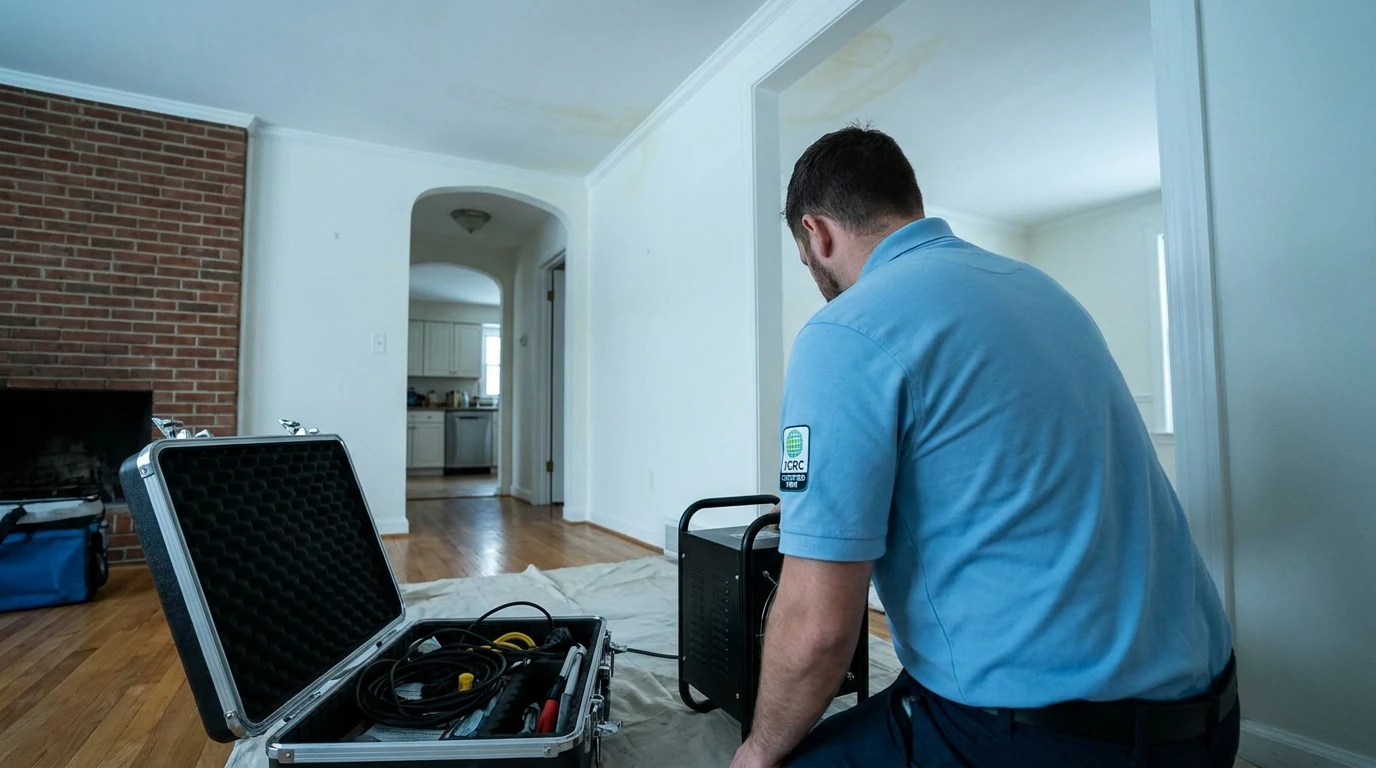
TL;DR: Professional odor control removes the source of a smell, not just the smell itself. Technicians identify what’s causing the odor (smoke residue, pet urine, sewage, mold, or decomposition), clean or remove the contaminated material, then use equipment like hydroxyl generators, thermal foggers, or air scrubbers to neutralize odor molecules trapped in porous surfaces. Candles, sprays, and plug-ins only cover the smell temporarily because they never touch the source.
If you’re a property manager in Bethesda trying to turn over a rental unit near Woodmont Triangle and the smell of last tenant’s cooking grease or a slow leak won’t quit no matter how many times you’ve wiped the counters, the problem usually isn’t cleanliness. It’s that odor compounds have soaked into drywall, subfloor, or HVAC ductwork where a sponge can’t reach. That’s the point where air fresheners stop working and a deodorization plan starts.
What Is Professional Odor Control and Deodorization?
Professional odor control is the process of finding and eliminating the physical source of a smell, then treating the space with equipment designed to break down odor-causing molecules rather than cover them up. It’s a different job than cleaning.
Most persistent odors in homes and commercial spaces around Bethesda and Chevy Chase trace back to one of a handful of sources: smoke and soot after a fire, standing or trapped moisture that’s gone musty, pet accidents that have penetrated carpet padding or subfloor, sewage backups, or decomposition. Each of those leaves behind a different type of residue, and each requires a different removal method. A technician’s first job on any odor call is figuring out which one they’re dealing with, because treating the wrong source wastes time and money.
Once the source is identified, the affected material either gets cleaned with an enzyme or oxidizing treatment, sealed, or removed entirely if it’s too saturated to save. Only after that does deodorization equipment come in to finish the job on the air itself.
How Does Professional Odor Removal Actually Work?
Odor removal works in three stages: source removal, surface treatment, and air/material deodorization using specialized equipment, usually in that order. Skipping a stage is why DIY attempts fail.
First, technicians remove or clean whatever’s holding the odor: pulling out saturated carpet pad, cleaning charred drywall, or extracting water from a subfloor. Porous materials (drywall, insulation, carpet, some wood) hold odor compounds far more stubbornly than hard surfaces, so those are usually the priority.
Second, remaining surfaces get treated with an antimicrobial or enzyme cleaner matched to the contaminant, which breaks down the organic material causing the smell rather than just masking it.
Third, the room (or whole structure, for larger jobs) gets treated with deodorization equipment:
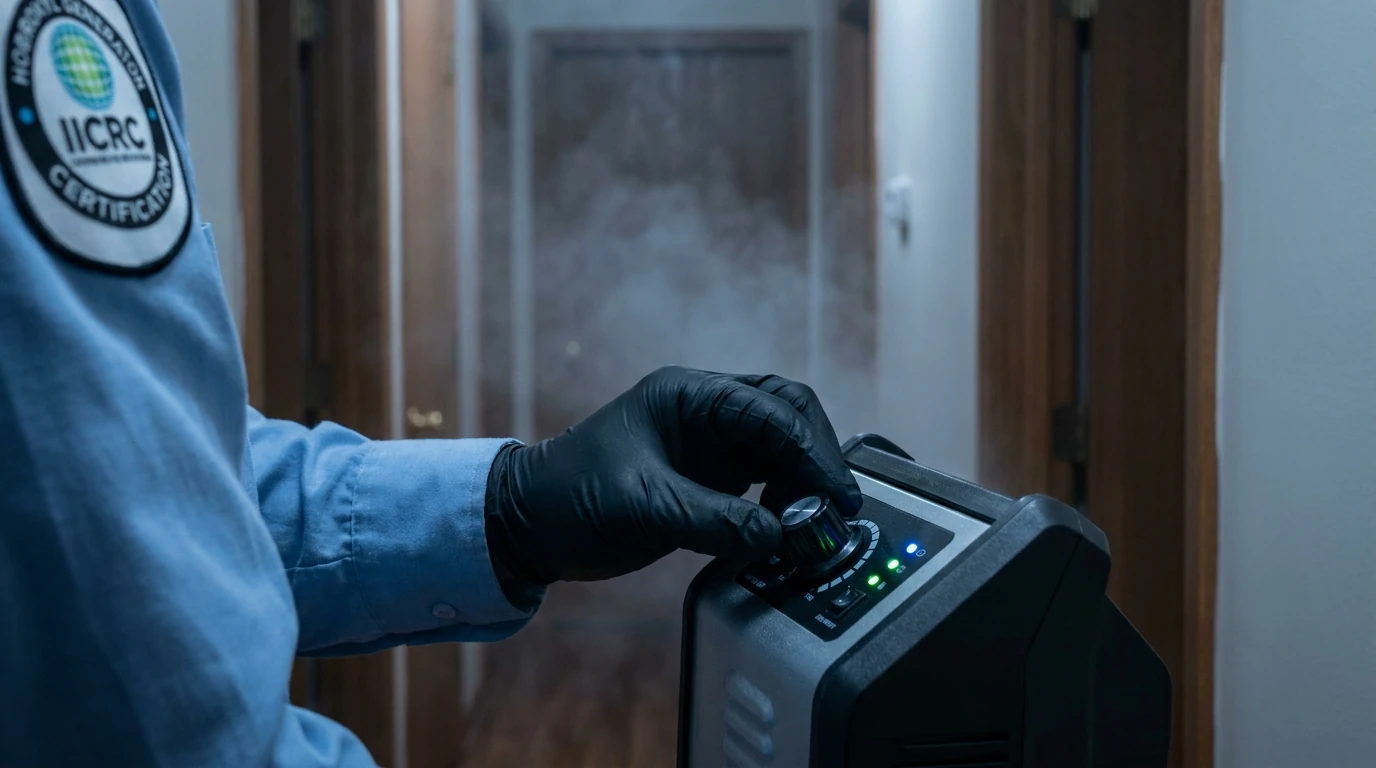
- Hydroxyl generators produce hydroxyl radicals that break down odor molecules in the air and on surfaces; they’re safe to run in occupied spaces, which makes them the default choice for homes.
- Thermal fogging vaporizes a deodorizing agent that penetrates the same cracks and pores smoke has already reached, which is why it’s common after fire damage.
- Ozone generators are effective but require the space to be vacated during treatment, since ozone is harmful to breathe. They’re better suited to unoccupied commercial spaces or vacant units.
- HEPA air scrubbers filter particulate out of the air, which helps with soot and dust but isn’t a substitute for the chemical breakdown hydroxyl or ozone treatment provides.
For jobs tied to a fire, this stage overlaps directly with the broader fire damage restoration process, since smoke odor and soot residue get addressed together.
What Causes Odors That Sprays and Candles Can’t Fix?
Odors that resist DIY treatment almost always mean the source material has absorbed the contaminant, not just the surface. Four sources account for most calls we get.
Smoke and soot leave behind an acidic residue that bonds to walls, fabric, and HVAC components. Febreze and ozone plug-ins do nothing to the chemical bond itself.
Musty, mildew-like smells usually mean moisture is active somewhere, often mold growth inside a wall cavity or under flooring that you can smell before you can see. If a room smells musty after a leak that was “dried” weeks ago, that’s a signal worth a closer look, not a reason to buy a stronger air freshener. Our post on signs of hidden mold covers what else to watch for.
Pet urine soaks through carpet into the pad and subfloor, where bacteria keep producing odor compounds long after the surface is clean. Carpet cleaning alone rarely resolves it; the pad usually has to come out.
Sewage and sanitary sewer odors carry pathogens along with the smell, which is why the EPA and IICRC both treat sewage-affected materials as a contamination issue, not just an odor problem. That work follows a sanitation protocol, not a deodorizing one.
When Should You Call a Professional for Odor Control?
Call a professional when the smell returns within a day or two of cleaning, when it’s tied to a fire, flood, or sewage event, or when you can’t identify the source. At that point, consumer products are treating a symptom.
Commercial property managers in Bethesda often hit this wall when trying to turn a unit between tenants on a deadline. A unit that still smells after painting and carpet cleaning usually has an odor source behind a wall or under flooring that needs targeted treatment, not another coat of paint. Waiting rarely improves it and can cost a rental listing or a lease.
For residential jobs, a musty smell that follows a known leak, or a lingering smoke smell weeks after a small kitchen fire, are both signs it’s time for a proper inspection. Request an odor assessment before relisting or re-occupying the space.
RestoPros of Central Maryland handles source identification and deodorization as part of its odor removal service, working alongside water, fire, and mold remediation crews so the source gets addressed, not just masked. Call RestoPros of Central Maryland at (240) 261-1639 to schedule an assessment for a property in Bethesda or anywhere in Central Maryland.
About RestoPros of Central Maryland
RestoPros of Central Maryland is a licensed and insured restoration company with IICRC WRT (Water) trained technicians, serving Rockville, Silver Spring, Bethesda and the surrounding Central Maryland communities, with a 4.9-star Google rating from 28 reviews. The company’s crews handle water damage restoration, fire damage restoration, mold remediation, odor removal, sewage cleanup, storm damage restoration, and contents restoration across Rockville, Bethesda, Silver Spring and the greater Central Maryland and D.C. suburb region. This post was prepared with input from Daniel Restum and the RestoPros team.