
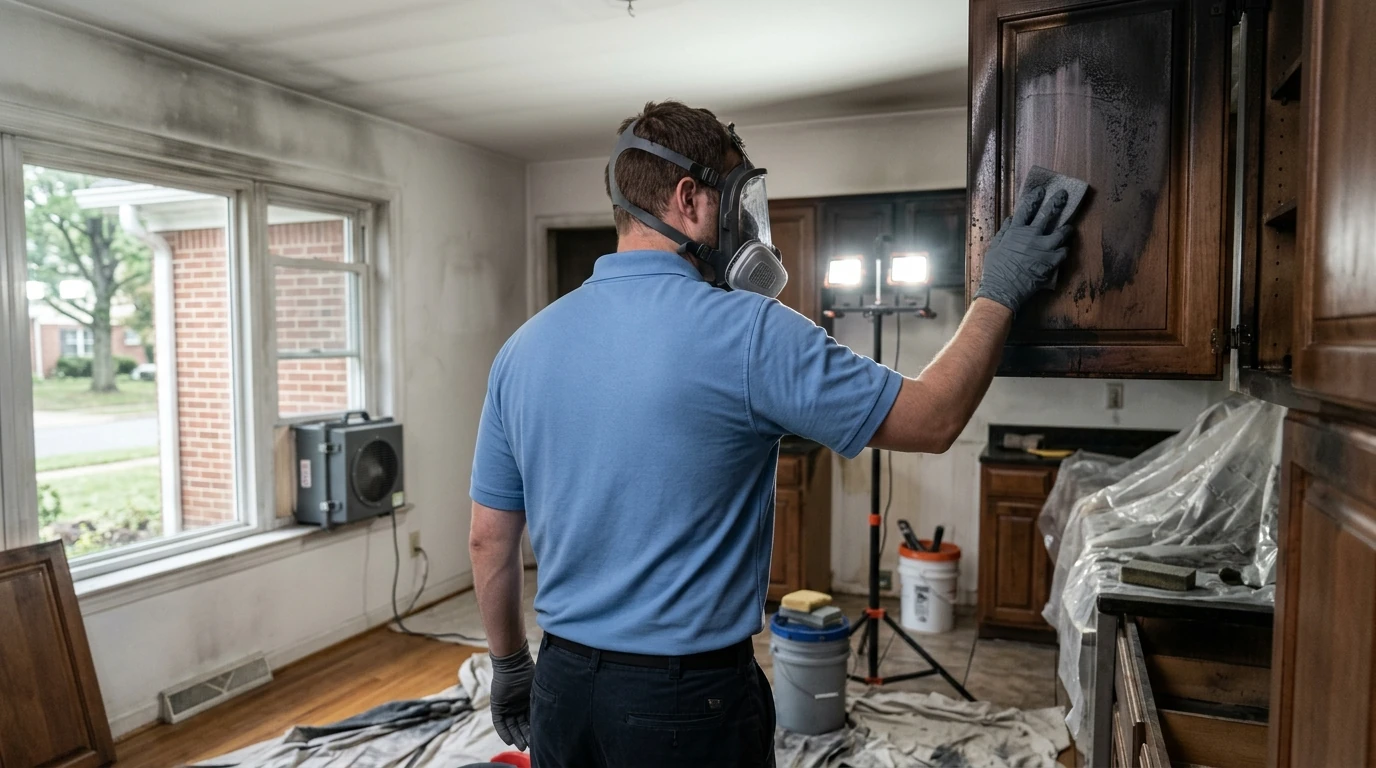
TL;DR: In Rockville, MD, fire damage restoration typically costs $2,000 to $5,000 for smoke and odor cleanup only, $8,000 to $60,000 for a contained room or multi-room fire with structural drying and soot removal, and $60,000 or more for a whole-house loss. The exact number depends on what burned, how far smoke traveled, and whether firefighting water added a second type of damage. A standard homeowners policy usually covers sudden fire loss after the deductible, but coverage varies by policy, so document the loss carefully and check your policy.
If a kitchen fire just went out and the adjuster is already asking for a scope of work, you need real numbers, not a ballpark. Fire damage restoration cost swings more than almost any other restoration category because “fire damage” covers everything from a scorched cabinet with smoke odor to a structure fire that took out a whole floor. This guide breaks down what Montgomery County homeowners actually pay, what moves the price, and how the insurance claim usually plays out.
How much does fire damage restoration cost in Rockville, MD?
Most Rockville homeowners pay somewhere between $2,000 and $60,000, with the number driven almost entirely by how much of the structure burned versus how much just absorbed smoke. A small, contained fire that stayed in one appliance or cabinet can be cleaned and deodorized for a few thousand dollars. A fire that spread through framing, insulation, and flooring pushes into tens of thousands fast.
The table below shows typical industry ranges by scenario. These are general figures, not a quote: every loss gets a written scope before work starts.
| Scenario | Typical cost range |
|---|---|
| Smoke and odor cleanup only, no charring | $2,000 - $5,000 |
| Single room, contained fire with smoke damage | $8,000 - $20,000 |
| Multi-room fire with structural drying and soot removal | $25,000 - $60,000 |
| Whole-house fire, extensive loss | $60,000 - $150,000+ |
| Contents pack-out, cleaning, and storage | $1,500 - $8,000 |
| Odor removal and deodorization treatment alone | $500 - $2,500 |
Note that the dollar figures above cover mitigation work: soot and smoke removal, structural drying, debris handling, odor treatment, and contents cleaning. Rebuilding drywall, flooring, and finishes after a significant fire is typically a separate project phase handled by a contractor once the restoration scope is complete.
What actually drives the price up or down?
The biggest cost factors are how much material absorbed smoke, what burned, and how fast cleanup started. Soot from synthetic materials like plastics and foam is more acidic and harder to remove than soot from natural materials like wood, which raises labor time and chemical treatment cost.
A few specifics that move the number in either direction:
- Water used to extinguish the fire. Most structure fires involve a fire department response, which means water damage layered on top of the fire damage. That adds extraction and structural drying to the scope under the ANSI/IICRC S500 water damage standard.
- How far smoke traveled. Smoke moves through HVAC ducts and wall cavities well beyond the room that burned. A fire in one bedroom can leave odor and residue throughout the whole house.
- Response time. Soot residue becomes more corrosive and harder to remove the longer it sits, especially on metal fixtures and electronics.
- Square footage and ceiling height. Larger rooms and vaulted ceilings mean more surface area to clean and more air volume to treat for odor.
- Code-related upgrades. If the fire exposed outdated wiring or materials that need to be brought up to current code before anything is closed up, that adds cost on the rebuild side, separate from the mitigation estimate.
Does homeowners insurance cover fire and smoke damage?
Most standard homeowners insurance policies cover sudden, accidental fire damage, including the cost of smoke and soot cleanup, after the deductible. Fire is one of the core named perils on nearly every standard policy, unlike flood or sewer backup, which need separate coverage.
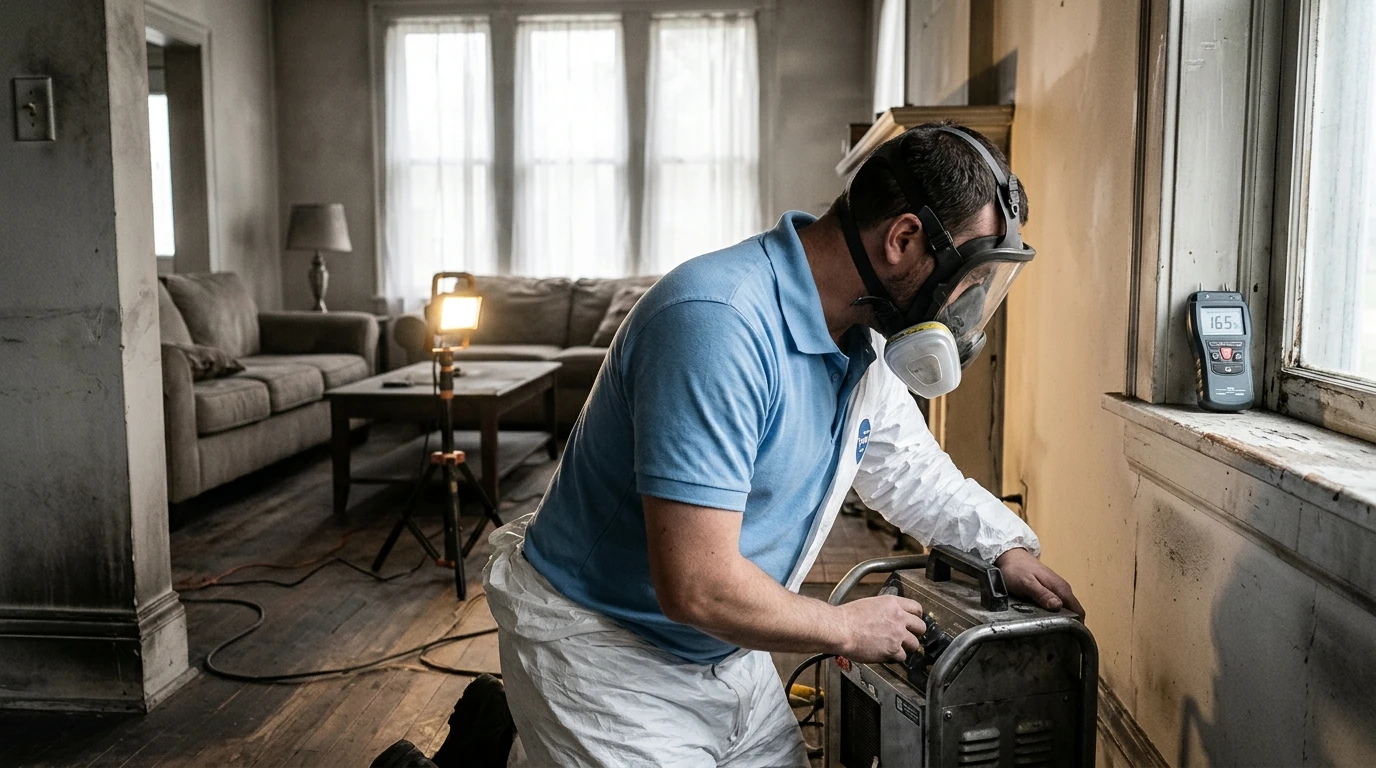
That said, coverage details vary by insurer and policy, so check what your specific policy covers. Dwelling coverage typically pays for structural repairs, personal property coverage pays for damaged contents, and many policies include additional living expenses (ALE) if the home is unlivable during the work. Keep every receipt, photograph the damage before anything is moved, and ask for a written itemized scope of work since adjusters use that document to set the claim payout.
Homeowners also have a duty to mitigate further damage once a fire is out, meaning prompt board-up, moisture control, and soot removal aren’t optional extras. Delaying cleanup can let an insurer argue some of the damage was avoidable.
What does the restoration process actually involve?
Fire damage restoration moves through a sequence of distinct phases, and understanding them helps explain where the cost comes from. The full breakdown lives in the fire damage restoration process guide, but at a high level:
- Assessment and scope. A technician documents the extent of fire, smoke, and any water damage, and writes a detailed scope for the insurance adjuster.
- Water extraction, if applicable. Standing water from firefighting efforts gets removed and the structure is set up to dry, following the IICRC S500 standard.
- Soot and smoke removal. Surfaces get cleaned with HEPA vacuums, chemical sponges, and specialized cleaners matched to the residue type, following the ANSI/IICRC S700 fire and smoke restoration standard.
- Odor treatment. Hydroxyl generators, thermal fogging, or ozone treatment (performed only in unoccupied spaces) neutralize smoke odor at the source rather than masking it.
- Contents restoration. Salvageable belongings get cleaned, deodorized, and stored off-site while the structure is worked on.
- Final walkthrough. The space is inspected for lingering odor or residue before it’s handed back.
Who should you call first after a house fire in Rockville?
Call a restoration company before you call a contractor, since mitigation has to happen first or soot damage spreads and odor sets into porous materials. RestoPros of Central Maryland answers calls 24/7 and can document the loss, start cleanup, and work from the insurance scope from the first visit.
Getting a written estimate before work begins protects both the claim and the budget. If the fire was small, ask specifically about smoke and odor cleanup pricing rather than assuming a full restoration scope is needed. Request a fire damage assessment to get an accurate number for your specific loss, or call RestoPros of Central Maryland at (240) 261-1639 to get a technician scheduled.
About RestoPros of Central Maryland
RestoPros of Central Maryland employs IICRC-certified technicians, licensed and insured, serving Rockville, Silver Spring, Bethesda, Gaithersburg, Columbia, and the surrounding Montgomery, Prince George’s, Howard, and Anne Arundel County communities. Their crews handle fire damage restoration, smoke damage restoration, contents restoration and storage, odor removal, water damage restoration, sewage cleanup, storm damage restoration, and mold remediation, and the phone is answered 24/7.
Video Transcript
A kitchen fire just happened, and your insurance adjuster is already asking for numbers. Here’s what fire damage restoration actually costs in Rockville, Maryland. Prices range from two thousand dollars for simple smoke cleanup to sixty thousand or more for a whole-house fire loss. Smoke and odor cleanup alone with no charring usually runs two to five thousand dollars for a contained situation. A multi-room fire needing structural drying and soot removal can cost twenty-five to sixty thousand dollars to fully restore. What drives the price up or down? Smoke type matters, plastic and foam soot is more acidic and harder to clean than natural wood soot. Firefighting water adds a second damage type, and smoke travels through ducts and walls far beyond the room that burned. Good news: most homeowners policies cover sudden fire damage after your deductible, including smoke and soot cleanup costs. Document everything: photos before cleanup, itemized estimates, and saved receipts support your claim. Check your policy, since coverage varies by insurer. Your contractor assesses the damage, extracts any firefighting water, then removes soot and smoke using HEPA vacuums and specialized cleaners. Don’t wait, soot gets more corrosive over time. Call RestoPros of Central Maryland at (240) 261-1639 to schedule an assessment.