
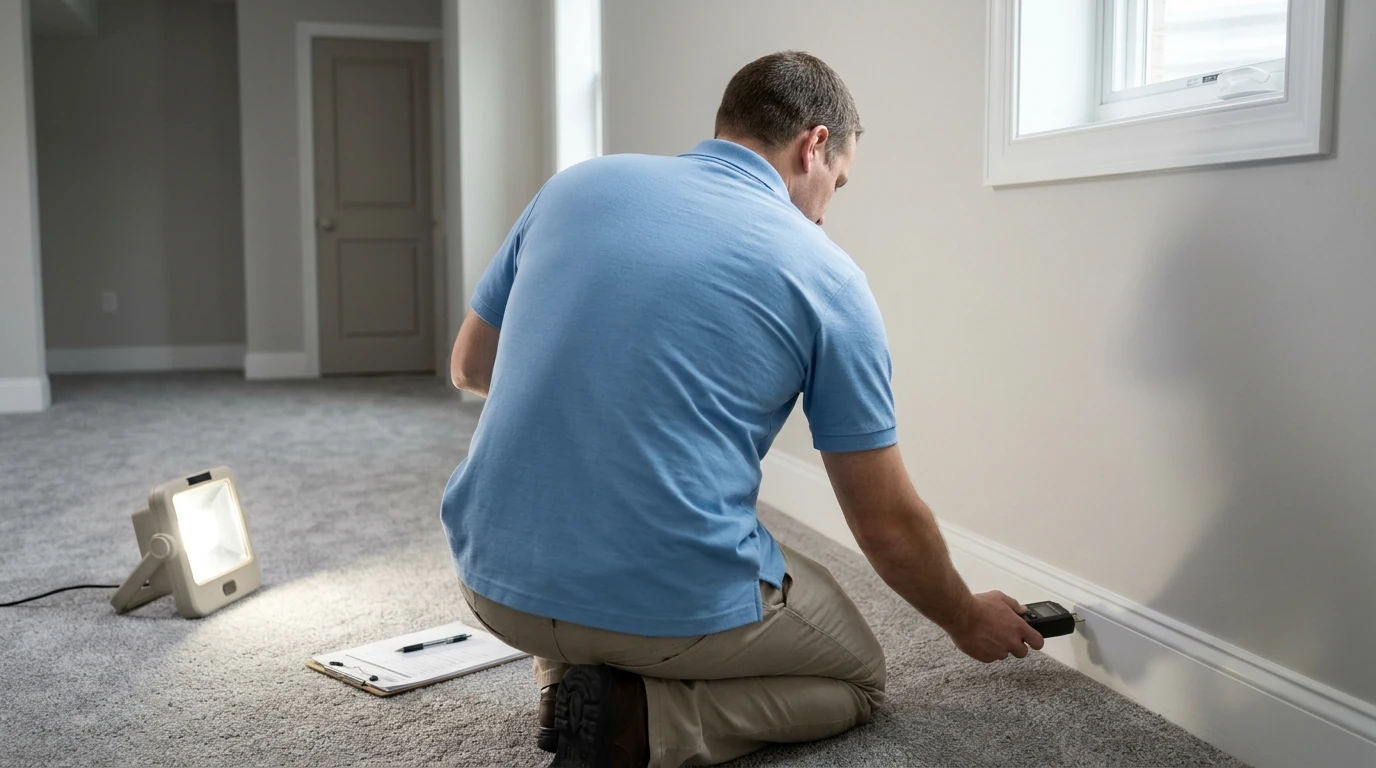
If you’ve ever been out of town while a storm rolled through and realized you had no idea what was happening in your basement, you already understand the specific kind of dread this homeowner felt. Heavy rain, an empty house, and a finished basement below grade is a combination that keeps people checking their phones mid-trip.
First, I want to say how appreciative I am of RestoPros of Central Maryland. While I was out of town we had heavy rain and I was concerned that water would be coming in to the basement. Jonathan and team were able to assess the situation the same day I spoke to them and to include using instruments to check for hidden moisture in my basement. It was an exercise and trust and they were very trustworthy. And while I didn’t have any water intrusion, I would highly recommend this company based on their professionalism and communication.
- choose2behappy, verified Google review
This review is worth unpacking because it’s not a dramatic flood story. It’s a story about what happens when the system works the way it’s supposed to: a worried call gets a same-day answer, the answer is based on actual measurements instead of a guess, and the homeowner gets told the truth even when the truth is “you’re fine.”
Why a same-day visit matters during active rain
A same-day assessment during heavy rain exists because the window to catch a developing leak is small and the cost of waiting is not. Water that enters a foundation during a storm doesn’t always show up as a puddle. It can wick up through a slab, track along a sill plate, or pool behind a finished wall for days before it’s visible.
When a homeowner is traveling, that visibility gap gets worse. There’s no one walking past the basement door to notice a musty smell or a damp spot on the carpet. A same-day visit closes that gap. It’s also worth noting: if storm water does find its way in from outside the foundation, it’s treated as contaminated water under the ANSI/IICRC S500 standard, not the same as a clean supply-line leak, which is one more reason to get eyes on it quickly rather than wait and see.
What “using instruments to check for hidden moisture” actually means
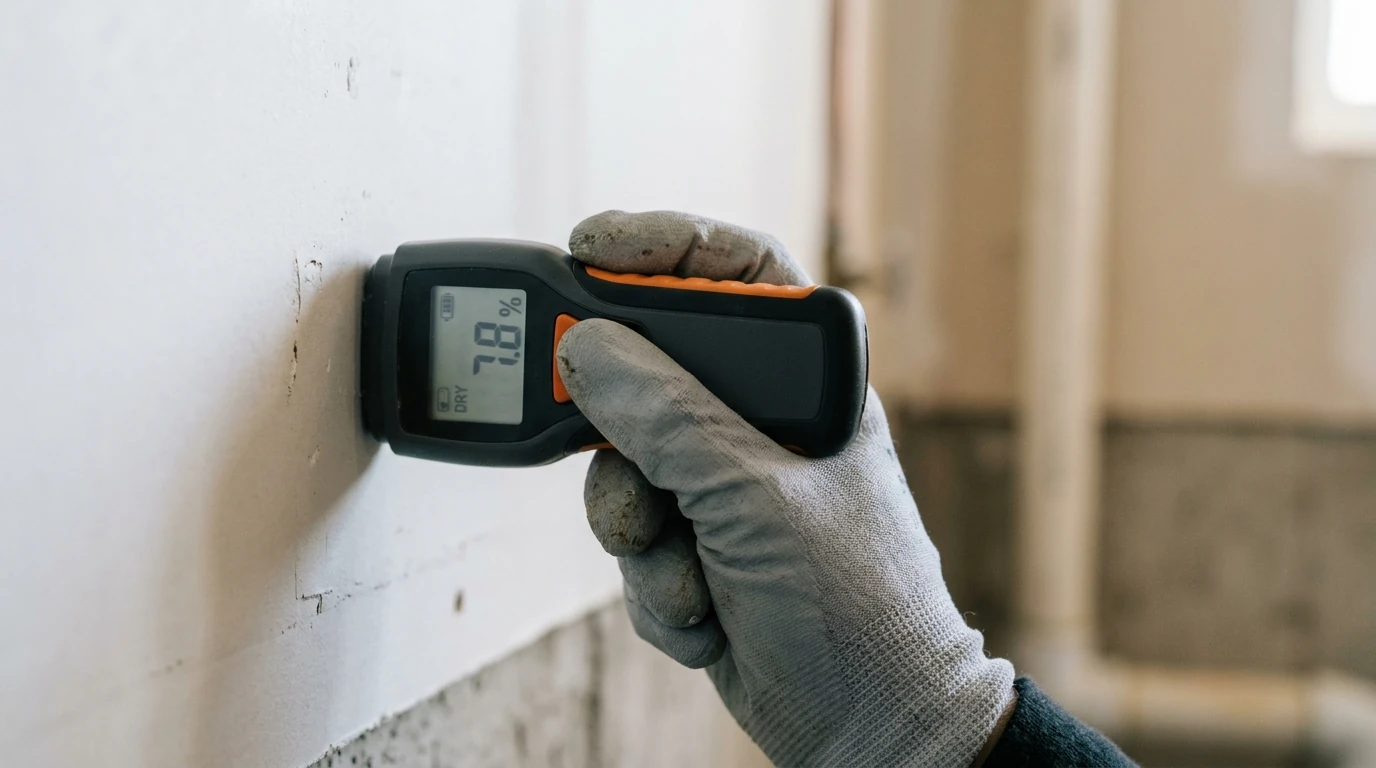
A hidden-moisture check means a technician uses handheld moisture meters and sometimes a hygrometer to measure actual moisture content inside walls, baseboards, and flooring, not just look for visible wet spots. Pin-type and non-invasive (pinless) meters both read moisture levels in materials like drywall, subfloor, and framing well below what the eye can detect.
The process is methodical: check the perimeter walls first, since that’s where groundwater and wind-driven rain are most likely to intrude, then move to any area with a history of past issues. A technician is also checking relative humidity in the room against what’s normal for that time of year, because elevated humidity without a visible source can point to a slow problem building somewhere out of sight. This is the same discipline used on every water-damage call, whether the home turns out to have a real loss or, like this one, a clean bill of health.
What it means when the answer is “no water intrusion”
A “no water intrusion” result is still a valuable outcome, because it replaces worry with a documented, measured fact instead of a guess. The alternative to calling is sitting with uncertainty until you get home, or worse, finding a problem weeks later after it’s had time to spread.
There’s also a quieter point here about how a restoration company should operate. The easy move, financially, would be to find something to sell. The right move is to measure, report what’s actually there, and say so plainly when there’s nothing to remediate. That’s the “exercise in trust” this reviewer described, and it only works if the company is willing to walk away from a job that doesn’t exist.
What good communication looks like when the homeowner isn’t there
Good communication on a call like this means the homeowner gets a clear explanation of what was checked, what the readings showed, and what it means, delivered while they’re still out of town and can’t see the property themselves. That’s a harder bar than talking to someone standing next to you. It requires describing specific readings and specific areas checked, not a vague “looks fine.”
For anyone in the same situation now, before the next heavy rain finds you out of town, it’s worth knowing what to do in the first 24 hours after water damage if the answer does come back positive, and who to call for a flooded basement in Rockville so you’re not searching mid-storm.
If heavy rain has you wondering about your own basement right now, or you want a baseline moisture check before the next storm system comes through, call RestoPros of Central Maryland at (240) 261-1639 and ask for a moisture assessment.