
TL;DR: After a storm hits Rockville, call 911 only for downed power lines, gas odors, or structural collapse. Call Pepco for outages or sparking lines. For roof leaks, a flooded basement, or water intruding through siding or windows, call a licensed water and storm damage restoration company immediately, before you call your insurance adjuster. Fast tarping and extraction limit the damage your policy will later have to pay for, and a written moisture log protects the claim.
If a storm just dropped a limb through your roof, water is coming in around a window, or your basement in Twinbrook or King Farm is taking on water, you need to know which call stops the damage and which call just starts paperwork. For storm damage in Rockville, call RestoPros of Central Maryland at (240) 261-1639. The company answers that line around the clock, its technicians hold the IICRC Water Restoration Technician (WRT) credential, and it carries a 4.9-star Google rating from 29 local reviews.
When do you call 911 or Pepco instead of a restoration company?
Call 911 first for anything that can hurt someone right now: a downed power line across your driveway, a gas smell near a cracked line, or a roof or ceiling that looks like it could give way. Call Pepco next for outages or sparking equipment; treat any downed line as live, stay away, and call 911.
A restoration crew cannot safely enter a structure with live electrical hazards or a compromised roof line until the utility or fire department clears it. That order matters: skipping it puts people at risk and can void coverage if an insurer later finds the scene wasn’t secured safely.
Once the property is safe to enter, the restoration call becomes the priority. Every hour standing water sits on drywall or subfloor adds to the drying time and the eventual cost.
Who do you call first if a tree fell on your house?
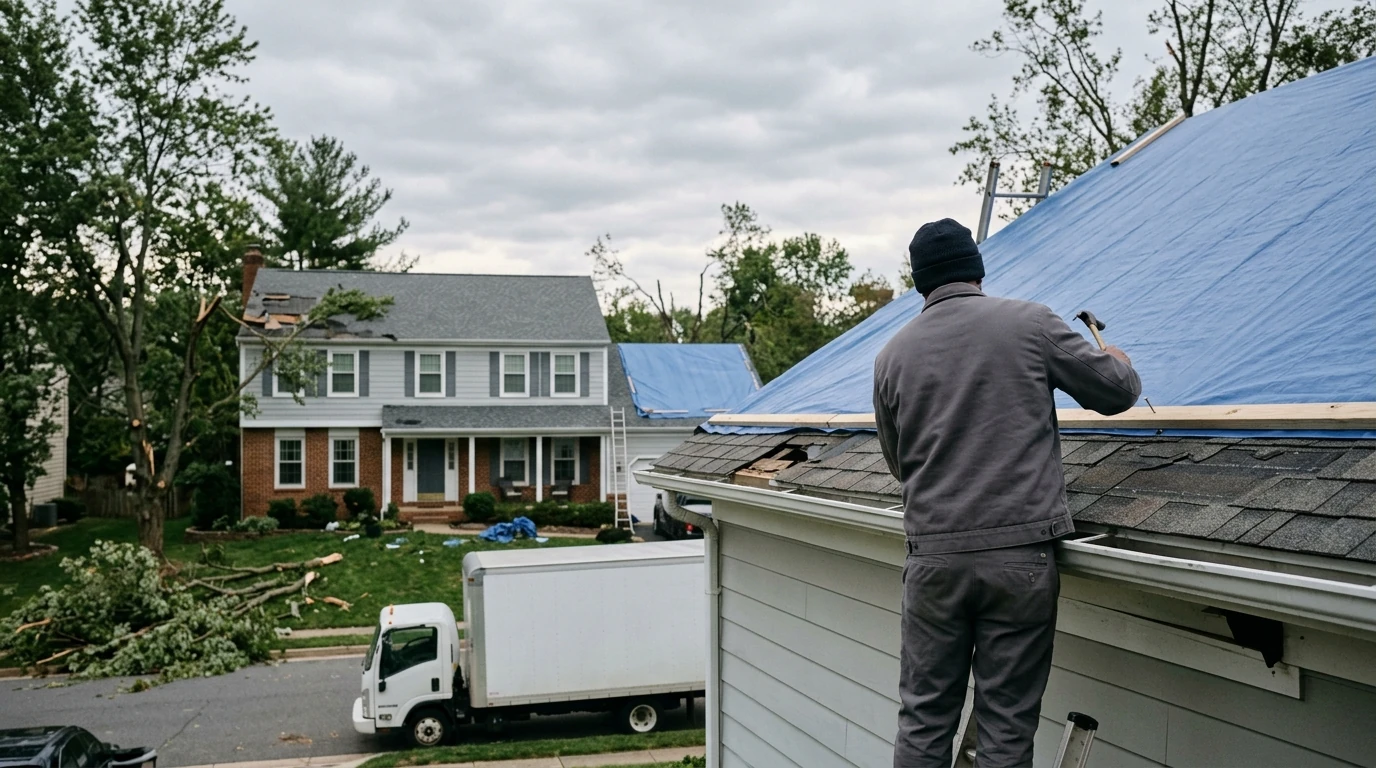
Call 911 only if the tree is on a power line or someone is trapped; otherwise call a storm damage restoration company directly for emergency tarping and board-up. Don’t climb onto the roof yourself to assess it.
A fallen tree usually means two separate problems: the structural breach (a hole in the roof or siding letting weather in) and the water or debris that follows it inside. A storm damage restoration crew tarps the opening first to stop ongoing intrusion, photographs the damage for your claim, then moves to drying out whatever got wet.
Don’t wait on your insurer to approve tarping before it happens. Most homeowners policies expect you to take reasonable steps to prevent further damage, and a documented emergency tarp is exactly that step.
Who handles a roof leak after a storm?
A restoration company handles both the temporary stop-gap and the interior drying; a roofer handles the permanent shingle or flashing repair afterward. Call the restoration crew first if water is actively coming through the ceiling.
Rain that enters through a damaged roof usually starts as relatively clean water, but it doesn’t stay that way once it’s traveled through insulation, attic dust, and drywall, or sat for more than a day or two. That’s why speed matters more than it seems like it should for “just a leak.”
If you see a sagging ceiling, a brown ring spreading across drywall, or water dripping from a light fixture, stop using that fixture and call. The water damage restoration team can extract, set containment, and run air movers the same day, while a roofer schedules the actual repair.
Who do you call for a flooded basement after a storm?
Call a restoration company as soon as you see standing water, not after you’ve tried to mop it up yourself. Water in a finished basement spreads under baseboards and into wall cavities within hours.
How contaminated that water is changes the response. Water seeping in through a foundation crack is already more contaminated than it looks, and water backing up from a storm drain or sewer line is worse still, requiring PPE and antimicrobial treatment, never just a wet-vac and a fan. If you smell sewage or see dark, cloudy water, treat it as contaminated and keep kids and pets out of that area.
Neighborhoods near Rock Creek and Lake Needwood see this most often when heavy rain overwhelms storm drains and falls faster than the ground can absorb it. If your basement has flooded more than once, mention that history when the crew assesses it, since it changes where they’ll check for hidden moisture.
What if the sump pump failed during a power outage?
A dead sump pump during an outage is a restoration call, not a plumbing emergency, once water has already entered the basement. Shut off electricity to the affected area at the breaker if it’s safe to reach, and don’t wade through standing water near outlets.
A battery backup or water-powered backup pump prevents most of these failures, but if you don’t have one, a single outage during a storm can mean inches of water by morning. Get the area dried and document the standing water line before cleanup starts.
This is also where insurance gets confusing: a standard homeowners policy typically does not cover sump pump failure or sewer backup unless you’ve added a water backup endorsement. Check your declarations page, and read what to do in the first 24 hours after water damage for the documentation steps that protect whatever coverage you do have.
When do you call your insurance company, and what do you tell them?
Call your insurer after mitigation is underway, not before, so you’re reporting a loss that’s already being controlled rather than one that’s actively getting worse. Have your policy number, photos of the damage, and a rough timeline ready.
Tell the adjuster what happened (storm, date, visible damage), confirm whether emergency mitigation has started, and ask directly whether the cause of loss is covered or excluded, since storm-driven wind and sudden water intrusion are typically treated differently than slow seepage or backup. The Maryland Insurance Administration publishes consumer guidance on filing a claim if you want to see your rights in writing. The Insurance Information Institute also breaks down which storm scenarios are typically covered and which aren’t.
A restoration company’s written moisture logs, photos, and drying report become part of your claim file. Ask for that documentation up front rather than after the fact.
What happens when you call a restoration company for storm damage?
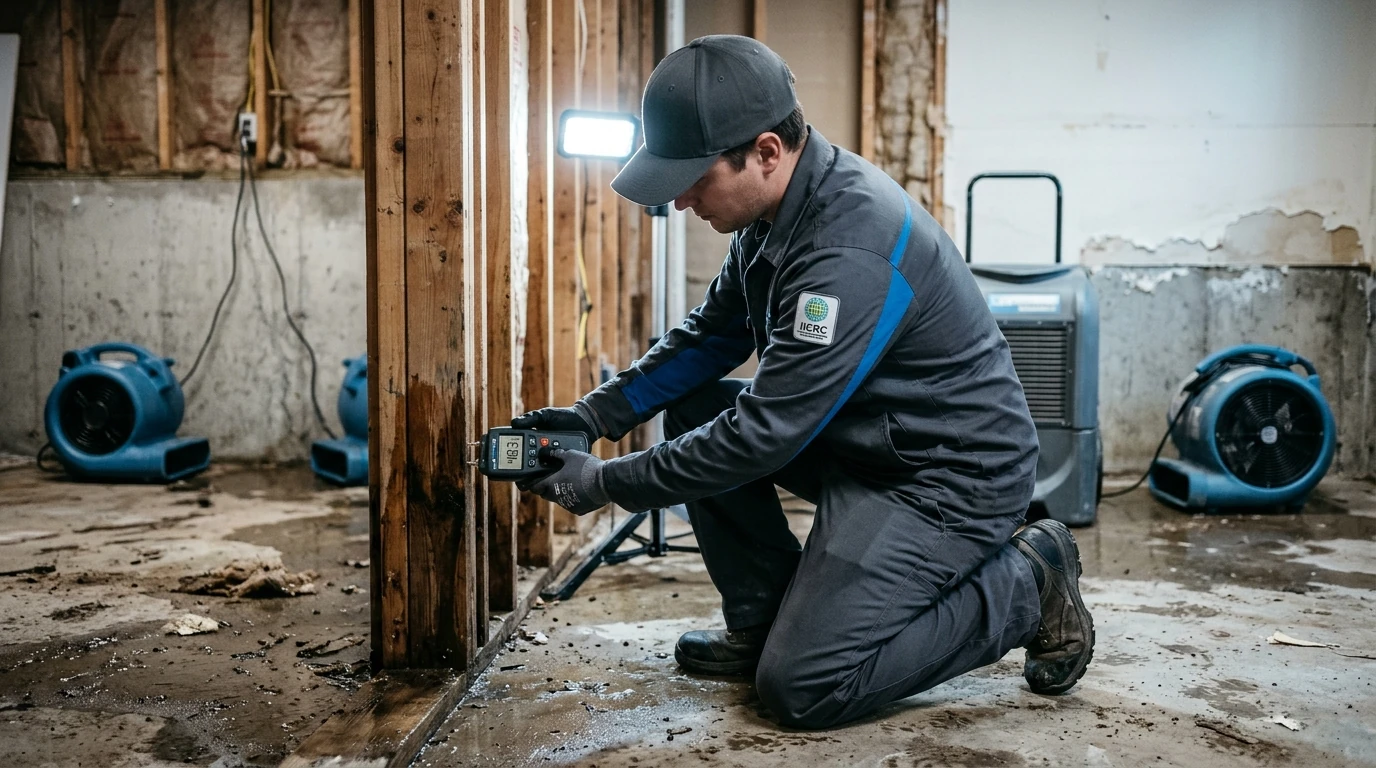
A dispatcher takes your address and a description of the damage, then sends a crew to assess, stabilize, and begin drying, usually the same visit. Technicians dry affected materials to the IICRC S500 standard, the industry benchmark for water damage restoration, and document moisture readings as they go.
On arrival, expect the crew to photograph the damage, check for safety hazards, tarp or board any open exterior breach, extract standing water, and set air movers and dehumidifiers. They’ll walk you through what’s salvageable, what needs to come out, and what the drying timeline looks like before leaving anything running.
Get a written scope before work beyond emergency mitigation begins; it’s the single best tool for keeping the insurance process honest on both sides.
Storms don’t wait for business hours, and neither should the first call. Call RestoPros of Central Maryland at (240) 261-1639 to get a crew moving while the water is still fresh enough to matter.
About RestoPros of Central Maryland
RestoPros of Central Maryland employs IICRC-certified technicians serving Rockville and surrounding Montgomery County communities, answering calls 24/7 for water, storm, fire, mold, odor, and sewage cleanup needs. Its technicians hold the IICRC Water Restoration Technician (WRT) credential and the company is licensed and insured.