
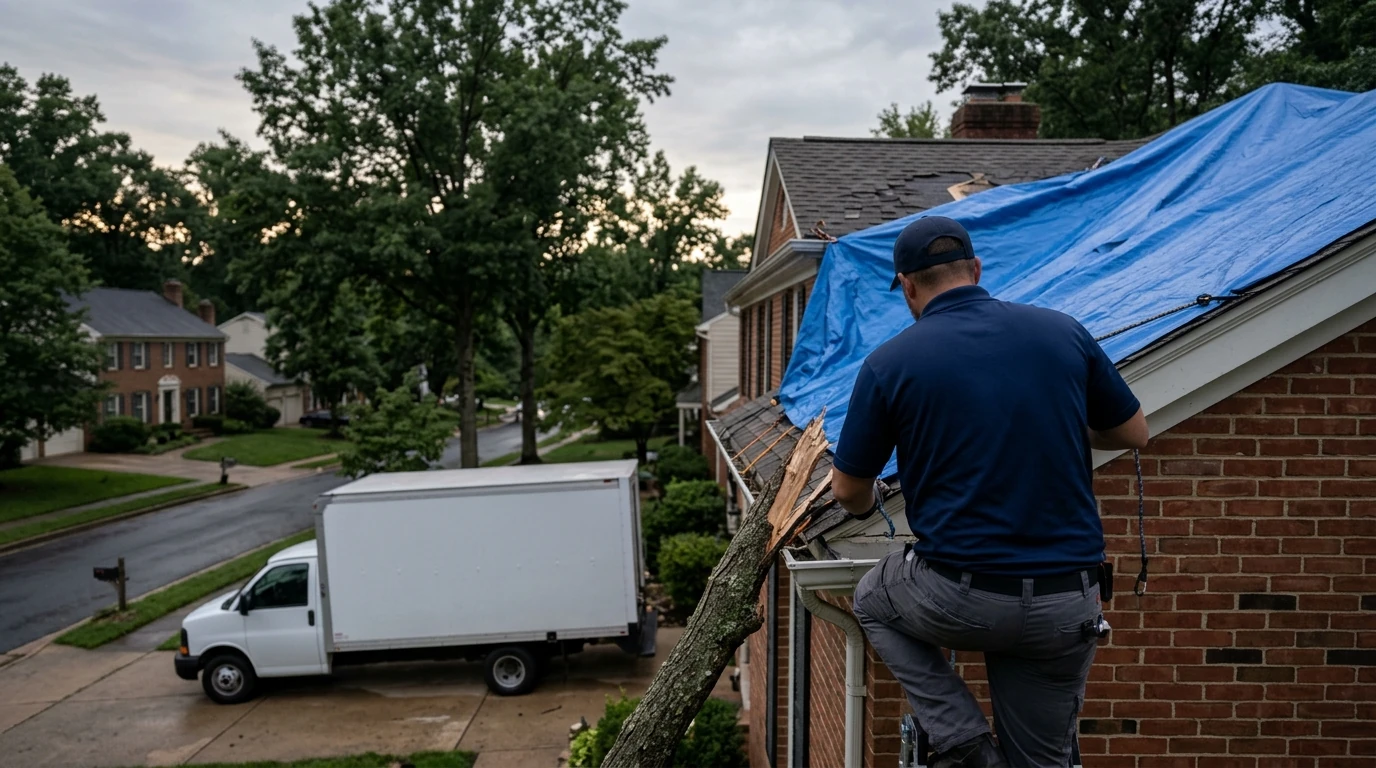
TL;DR: Storm damage restoration in Rockville, MD typically costs between $300 for basic emergency tarping and $20,000 or more for a whole-home job with water intrusion and structural drying. Most jobs that combine emergency board-up, water extraction, and drying land between $1,500 and $12,000. Homeowners insurance usually covers sudden wind and tree damage but not rising floodwater, so documenting the damage and getting a written scope protects the claim.
If a thunderstorm just drove a branch through your roof near Rockville Town Center, or wind-driven rain found its way into a finished basement off Twinbrook Parkway, you’re probably staring at a soaked ceiling and wondering what this is going to cost before you even call your insurance agent. Storm damage pricing in Montgomery County swings widely because “storm damage” covers everything from a $400 tarp job to a five-figure drying and cleanup project after water worked its way through drywall, insulation, and flooring. Here’s how the pricing actually breaks down, and what decides which end of the range your job lands on.
How Much Does Storm Damage Restoration Cost in Rockville, MD?
Storm damage restoration in the Rockville area typically runs $300 to $20,000 or more, with most residential jobs landing between $1,500 and $12,000 once water intrusion and structural drying are involved. The final number depends on whether the job is a quick tarp-and-board response or a multi-room drying project after wind-driven rain or a fallen tree opened the roof or siding.
| Scope of Work | Typical Cost Range |
|---|---|
| Emergency tarping or board-up (roof, broken window) | $300 - $1,200 |
| Water extraction and structural drying (single room or area) | $1,500 - $4,500 |
| Multi-room water intrusion with full structural drying | $4,000 - $12,000 |
| Debris removal and tree-service coordination (no structural damage) | $300 - $1,500 |
| Whole-home storm mitigation (wind-driven water across multiple floors) | $8,000 - $20,000+ |
These are typical ranges for Central Maryland, not a quote for any specific property. Rockville’s mature oak canopy, especially around older neighborhoods near Lake Needwood, means fallen-limb claims are common here, and every loss is different enough that a licensed restoration company should walk the property and put the scope in writing before work begins.
What Drives Storm Damage Costs Up or Down?
The biggest cost drivers are how much water got in, how long it sat before extraction started, how many rooms or floors it reached, and whether a fallen tree or wind-torn roof needs emergency stabilization before drying can even start.
- Water category. Wind-driven storm rain is typically treated as Category 3 (grossly contaminated) from the outset, since it carries debris and contaminants as it enters, unlike a clean interior supply-line leak, which starts as Category 1 and only degrades the longer it sits. That difference changes how much material has to come out versus dry in place.
- Response time. Mold can begin growing on wet materials within 24 to 48 hours, so a same-day start keeps the remediation footprint smaller and the invoice lower.
- Square footage and floors affected. A soaked basement corner costs far less than water that traveled across two floors through a shared stairwell.
- Materials involved. Drywall and blown-in insulation usually need to be removed and replaced in a storm loss; hardwood and tile can often be dried in place with faster response.
- Tree and debris complexity. A tree resting on the roof usually requires a tree service, and sometimes an engineer’s sign-off, before a restoration crew can safely access the interior, which adds coordination time.
Does Homeowners Insurance Cover Storm Damage in Maryland?
Most standard Maryland homeowners policies cover sudden wind damage, such as a tree limb through the roof or wind-torn shingles, along with the water intrusion that follows, but they exclude rising floodwater, which needs a separate flood policy, and gradual seepage, which standard policies generally don’t cover.
Wind and hail are named perils on nearly every standard policy, so a tree through the roof or siding torn off in a storm is typically a covered claim, subject to your deductible. The rainwater that comes in through that new opening in the roof is usually covered too, since it stems from the covered wind event, as long as you act promptly to tarp it and stop further intrusion.
What’s not covered: surface flooding from an overflowing creek or street flooding entering the home. That requires a separate flood policy, typically through the National Flood Insurance Program. Likewise, if storm runoff backs up through a floor drain or a sump pump fails during the storm, that’s generally only covered with a separate water backup endorsement, not standard wind coverage. For the general rules on what a standard policy pays for water damage, see our breakdown of what homeowners insurance covers for water damage. The Maryland Insurance Administration is a good resource for policy-specific questions.
What Happens During a Storm Damage Restoration Job?
A storm damage job moves through safety stabilization first, then extraction and drying, then documentation for the insurance claim.
- Safety assessment and stabilization. Tarping the roof, boarding broken windows, and shutting off power to any affected circuits before anyone enters.
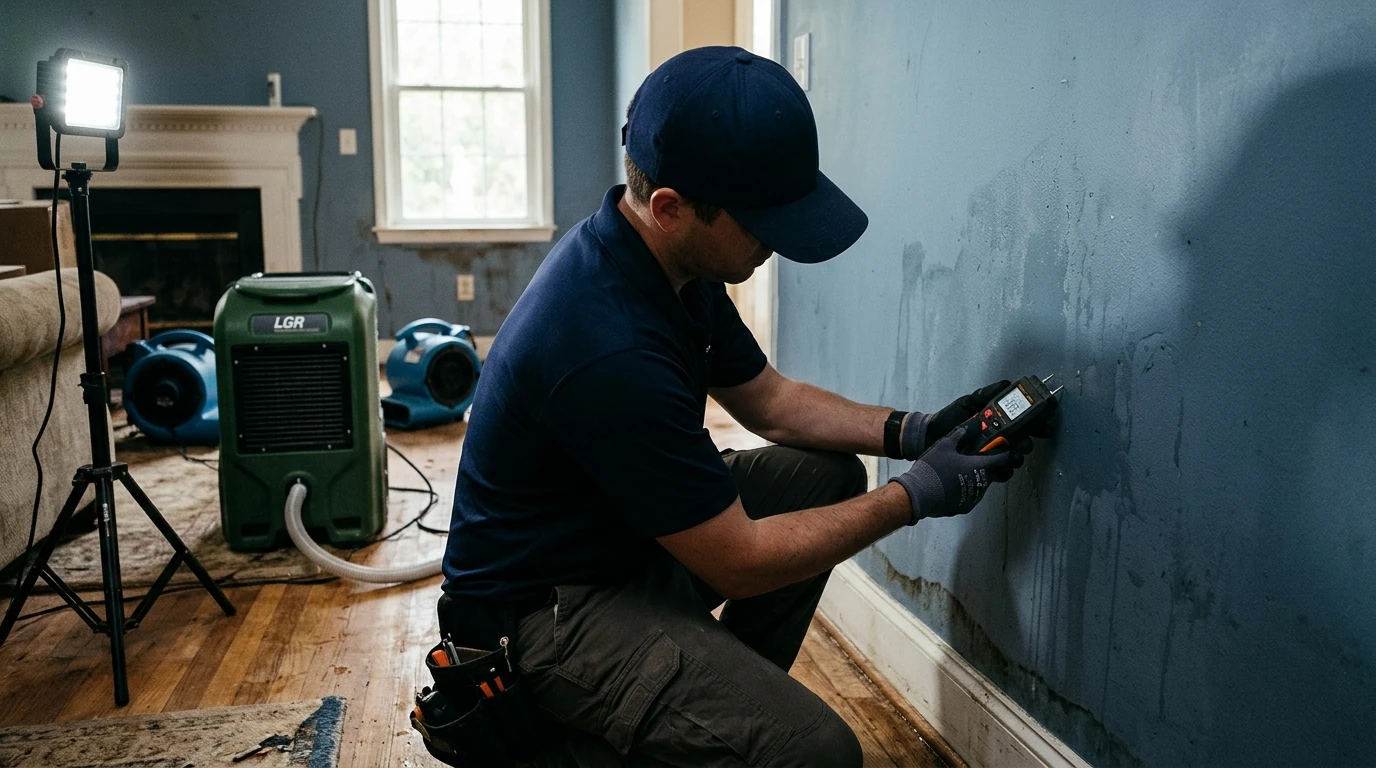
- Water extraction and drying setup. Pulling standing water and placing air movers and LGR dehumidifiers, following the ANSI/IICRC S500 standard for structural drying.
- Moisture mapping. Daily readings on affected materials until they reach a verified dry standard, not just a visual check.
- Debris and tree coordination. Scheduling a licensed tree service when a fallen tree is involved, so the restoration crew can safely access and dry the interior.
- Documentation. Photos, moisture logs, and a written scope of work that the adjuster can review against the claim.
Who Should You Call First After Storm Damage in Rockville?
Once everyone is safe, call a storm and water restoration company before you call anyone else, because getting a tarp up and extraction started within hours limits how much of the home ends up needing replacement instead of drying.
RestoPros of Central Maryland answers calls 24/7 and holds a 4.9-star Google rating from local homeowners, and can get a technician out to tarp a roof or start water extraction before secondary damage sets in, then document the loss for the adjuster from the first visit. Call RestoPros of Central Maryland at (240) 261-1639 for an assessment.
Storm damage in Rockville rarely fits neatly into one line item, which is why a written scope matters more than a ballpark number. Request a damage assessment before the drying equipment ever gets delivered, so you know exactly what the job covers and what your insurer is likely to pay.
About RestoPros of Central Maryland
RestoPros of Central Maryland is a restoration company with IICRC-certified (WRT) technicians, serving Rockville and the surrounding Montgomery County communities, available 24/7. Their technicians handle storm damage restoration, water damage restoration, water cleanup, fire and smoke damage restoration, mold remediation, sewage cleanup, odor removal, and contents restoration and storage across Central Maryland.
Video Transcript
A sudden summer storm near Rockville Town Center can drive a tree branch through your roof, leaving you staring at a soaked, dripping ceiling. Storm restoration costs here range from three hundred dollars for emergency tarping to twenty thousand or more for whole-home water damage. Most jobs combining emergency board-up, water extraction, and structural drying land between fifteen hundred and twelve thousand dollars total. Wind-driven rain carries debris and contaminants the moment it enters, so your contractor treats it differently than a clean water leak. Mold can start growing within twenty-four to forty-eight hours, which is why calling your contractor quickly keeps costs much lower. Water spreading across multiple rooms or floors costs far more to dry than a single soaked corner in your basement. A tree resting on your roof often needs a tree service, sometimes an engineer, before drying can safely begin. Homeowners insurance usually covers sudden wind damage and fallen tree damage, but rising floodwater typically needs its own separate flood policy. Your contractor stabilizes the property, extracts standing water, sets up professional drying equipment, and documents every step to help support your insurance claim. Don’t let small damage become a big repair. Call RestoPros of Central Maryland at (240) 261-1639 to schedule an assessment.