
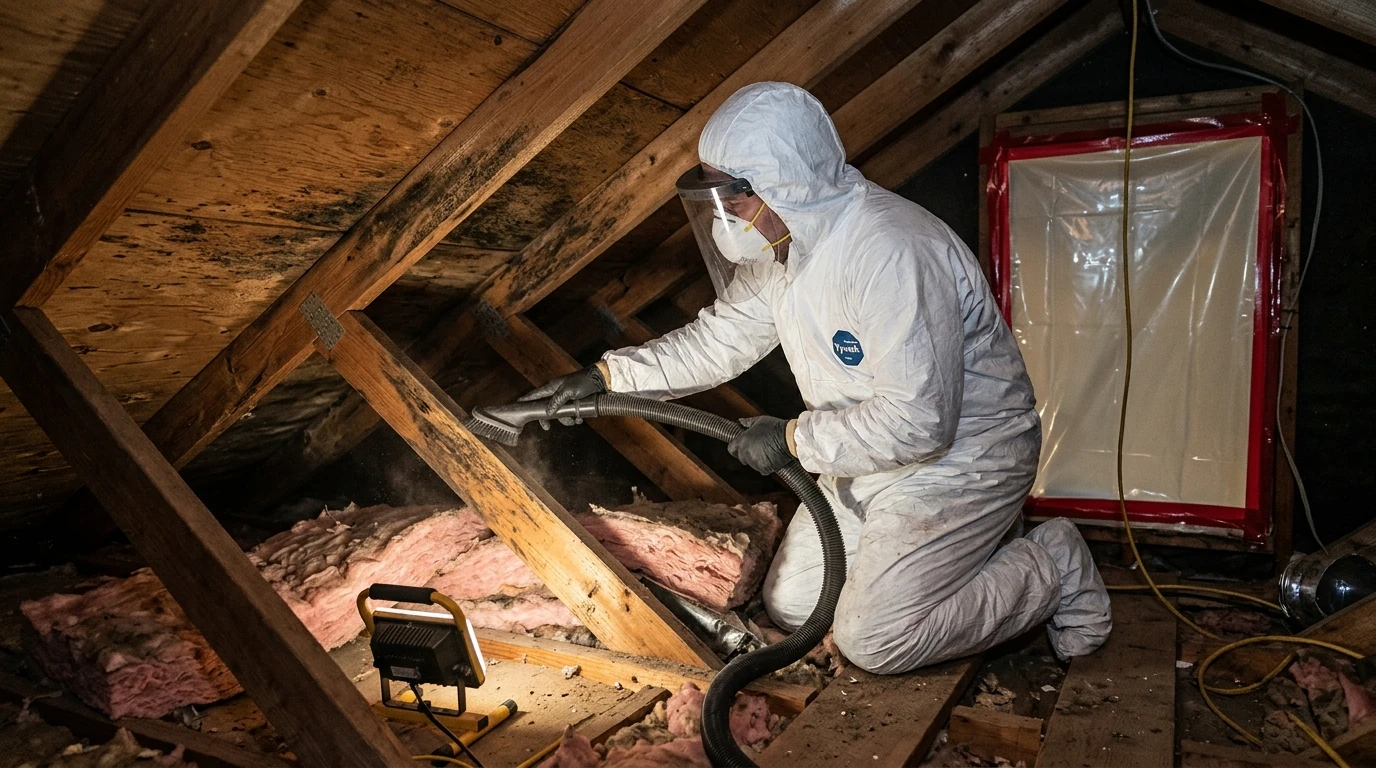
TL;DR: Attic mold removal in Rockville typically costs $500 to $8,000. A small patch of surface mold on the sheathing sits at the low end; widespread growth tied to an active roof leak or poor ventilation, especially if insulation has to come out, pushes the price up. Insurance sometimes covers it when a sudden event caused the moisture; a slow ventilation problem usually doesn’t.
If a home inspector just flagged dark staining across your attic rafters before a Rockville sale closes, or you pulled down the attic stairs and caught a musty smell with streaky discoloration on the plywood, you’re trying to figure out two things fast: how bad is this, and what’s it going to cost to fix. Attic mold is common in older Twinbrook and King Farm homes where ridge vents and soffit vents don’t move enough air, and in newer builds where a roof leak went unnoticed for months. The price depends almost entirely on how much surface area is affected and whether the insulation has to go.
How much does attic mold removal cost in Rockville, MD?
Most Rockville homeowners pay between $500 and $8,000 for attic mold removal, with the majority of jobs landing in the $1,200 to $3,500 range. The spread comes down to square footage affected, whether insulation needs removal, and whether an active moisture source is still feeding the growth.
| Scenario | Typical Cost Range |
|---|---|
| Small isolated spot on sheathing (under 10 sq ft) | $500 - $1,200 |
| Moderate growth across rafters/sheathing (10-100 sq ft) | $1,200 - $3,000 |
| Widespread growth requiring insulation removal | $2,500 - $5,500 |
| Mold tied to an active, unrepaired roof leak | $3,000 - $6,500 |
| Large or multi-level attic footprint (2,000+ sq ft) | $4,000 - $8,000 |
These are typical industry ranges, not a quote. Every attic is different, and a written scope after an on-site look is the only way to get an exact number.
What drives the price up or down?
The single biggest factor is whether the fiberglass or blown-in insulation has to be removed and bagged out, since porous materials that have absorbed moisture rarely clean up well and usually get replaced instead. That alone can double the labor time compared to a job limited to wiping and treating exposed wood.
Other factors that move the number:
- Roof access. Steep rooflines, cramped knee-wall attics, or finished attic spaces with limited crawl access slow the work down.
- Source of moisture. Mold caused by a still-leaking roof costs more to remediate because containment has to account for continued water intrusion until the leak itself is fixed by a roofer.
- Ventilation condition. Attics with blocked soffit vents or undersized ridge vents often show mold across a wider area because condensation has nowhere to escape.
- Odor penetration. Musty smell that’s worked into insulation or duct boots may need extra air scrubbing time to fully clear.
Will homeowners insurance cover attic mold removal?
Homeowners insurance sometimes covers attic mold removal, but only when the moisture came from a sudden, accidental event, like a storm that tore off shingles and let rain in overnight. Mold caused by gradual condensation from poor attic ventilation, or a slow roof leak that went unnoticed for months, is typically excluded as a maintenance issue.
This is the pattern across most standard policies, confirmed by the Insurance Information Institute: sudden and accidental water damage is generally covered, gradual deterioration generally is not. Mold coverage itself is often capped even on claims that are otherwise approved, so check your policy’s specific mold sub-limit before assuming full replacement cost is covered.
Documentation matters either way. Photos of the roof leak date, repair invoices, and a written mold remediation scope all help if you do file a claim. If the mold stems from a ventilation problem rather than a storm event, budget for it as an out-of-pocket repair rather than counting on coverage.
What does the attic mold remediation process involve?
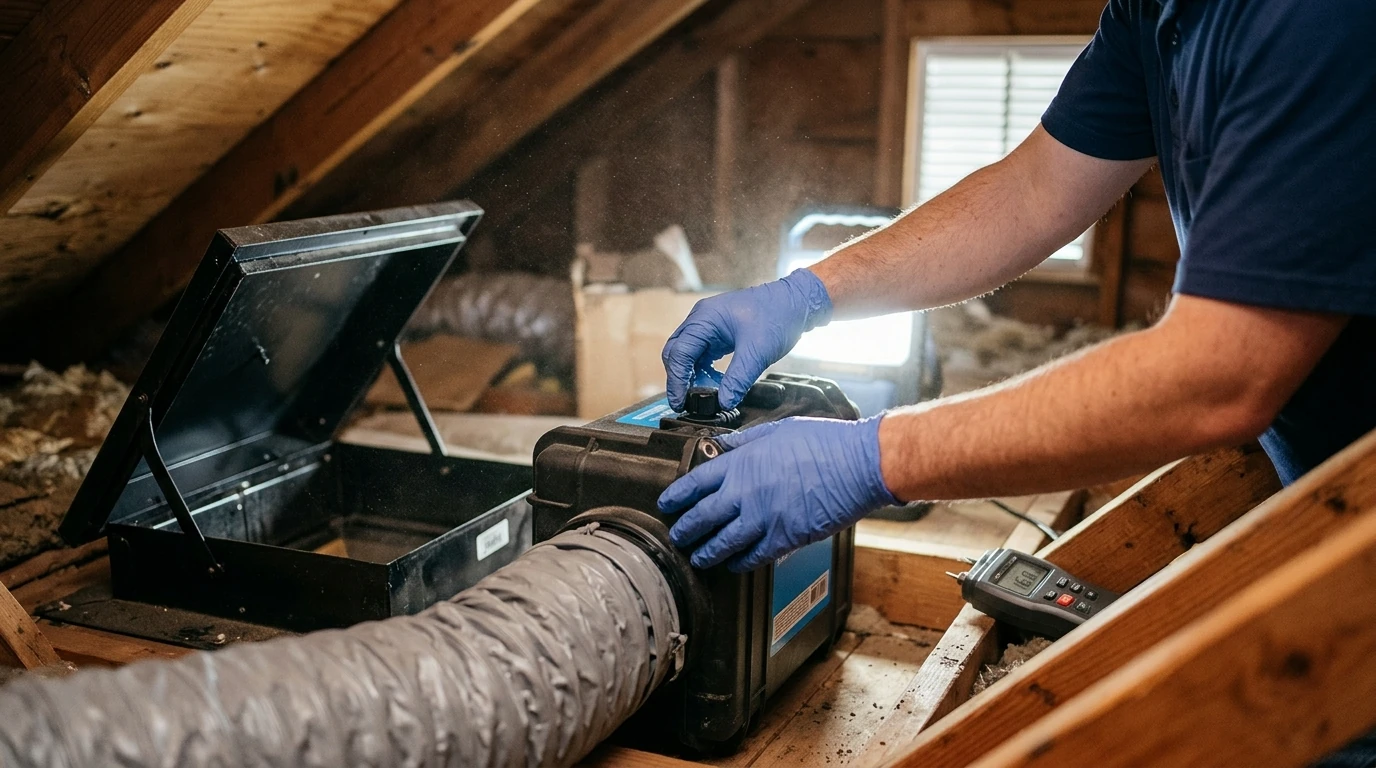
Attic mold remediation follows the containment, removal, and treatment sequence set out in the ANSI/IICRC S520 standard for professional mold remediation. The crew isolates the attic access point, removes what can’t be cleaned, treats the remaining wood, and runs air scrubbers until the space clears.
- Containment. Poly sheeting seals the attic access or hatch to keep spores from spreading into living space during the work.
- HEPA vacuuming and physical removal. Affected insulation is bagged and removed; moldy debris on sheathing is vacuumed and scraped where it won’t come clean.
- Antimicrobial treatment. Remaining wood surfaces get treated to address existing growth and inhibit regrowth.
- HEPA air scrubbing. Negative air pressure and filtration clear airborne spores before containment comes down.
- Final clearance of the work area. The crew confirms surfaces are clean to the touch and odor-free before wrapping up.
If the mold is tied to damaged roof sheathing or decking that needs to be cut out and replaced, that carpentry work is typically handled separately by a roofer or carpenter rather than the remediation crew, since fixing the moisture source is a different trade from removing the mold itself.
When is it time to call a mold remediation company in Rockville?
Call a professional once you can see mold spreading beyond a single small spot, smell a persistent musty odor from the attic, or know the growth followed a roof leak. RestoPros of Central Maryland handles the containment, removal, and treatment work for homes across Rockville, Bethesda, Silver Spring, Gaithersburg, Germantown, and nearby communities, with the crew available 24/7.
For a wider look at what whole-home mold remediation runs in this market, see our Rockville mold remediation cost guide, and if you’re not sure who to call first, our guide on who to call for mold remediation in Rockville walks through the order of calls.
Mold doesn’t wait. The EPA notes that mold can begin growing on wet materials within 24 to 48 hours, so an attic that’s been damp for weeks already has an established colony, not a fresh spot. Request an estimate once you’ve spotted staining or noticed a musty smell in the attic, rather than waiting to see if it spreads.
About RestoPros of Central Maryland
RestoPros of Central Maryland employs IICRC-certified technicians serving Rockville and the surrounding Montgomery, Prince George’s, Howard, and Anne Arundel County communities. The company is licensed and insured, answers calls 24/7, and handles water damage, fire and smoke damage, storm damage, sewage cleanup, odor removal, and mold remediation for homes and businesses across Central Maryland.
Video Transcript
Found dark staining or a musty smell in your attic? You’re probably wondering how bad it is, and what it costs to fix. In Rockville, attic mold removal typically runs five hundred to eight thousand dollars, most jobs landing between twelve hundred and thirty-five hundred. The biggest cost driver is insulation. Once fiberglass or blown-in insulation absorbs moisture, it usually has to be bagged out and replaced, not cleaned. Poor roof access, blocked soffit vents, and an active roof leak all push growth wider, and the price higher, than a small isolated spot. Homeowners insurance sometimes covers attic mold removal, but only when a sudden event, like storm damage, caused the moisture in the first place. A slow ventilation problem is usually treated as maintenance, not a covered claim. Photos and repair invoices help document any claim you do file. Professional remediation starts with containment. Your contractor seals the attic access, then removes anything too damaged to clean safely. Remaining wood gets treated with antimicrobial solution, and HEPA air scrubbers clear spores from the space before the job is called complete. If mold spreads beyond one small spot, or you smell musty odor each time you open the attic, it’s time to call a professional. Call RestoPros of Central Maryland at (240) 261-1639 to schedule an assessment.